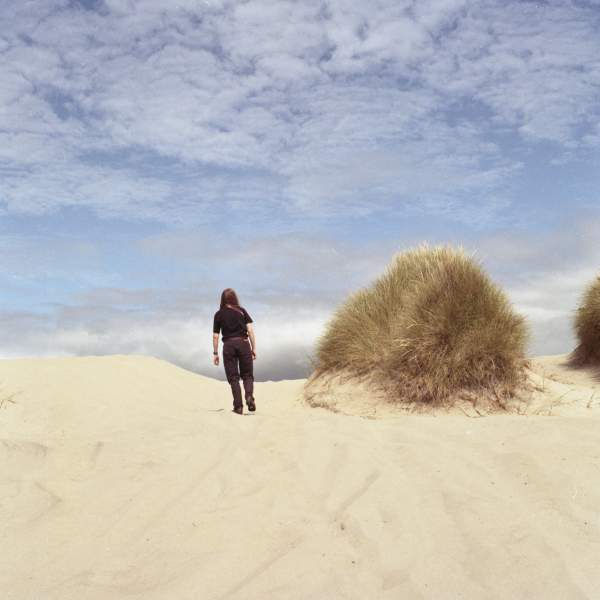
The photographic project by Ema Širec (2001) is a visual journey across the western and southern United States — from Seattle to Texas — spanning more than ten thousand miles and countless memories. The series traces the landscapes that have shaped the American imagination: vast deserts, monumental forests, endless highways, and meticulously preserved national parks. The project examines how a nation constructs its identity through land and landscape.
Coming from an ex-Yugoslav country, “America” had always appeared to her as something larger than life — a dream built through television, cinema, and the promise of freedom. For generations raised in the aftermath of political collapse and social transition, America symbolized movement, possibility, and reinvention.
Although the United States today also represents contradictions, inequality, and the myth of exceptionalism, a lingering sense of something greater, almost sacred, still remains. The project began with longing — the desire to travel, to observe, and to experience freedom. Yet throughout the journey, freedom gradually revealed itself as fragile, even illusory.
Every landscape carried signs of control and ownership: fences cutting through fields, warning signs protecting fragile ground, and ticketed entrances to nature. America presents itself as “the land of the free,” yet its geography is carefully managed, bordered, and commodified. What does freedom mean when it must be regulated, permitted, or consumed?
Driving through deserts, forests, and endless highways, America began to emerge not only as a physical territory, but also as a performance — a stage for its own mythology. The landscapes were breathtaking, yet they simultaneously spoke of conquest, displacement, and historical denial. The mountains that inspire awe were once sacred lands taken away; the roads that promise adventure were built upon erasure. Beauty and violence coexist within the same frame.
Within the project, nature becomes both subject and mirror. It serves as a way of understanding how ideology seeps into the soil, how freedom is measured in square miles, and how power hides beneath the surface of beauty. The work does not seek to expose or condemn, but rather to observe — to stand before these spaces and ask what they reveal about the stories societies choose to believe.
The camera therefore becomes a tool of negotiation: between reverence and discomfort, between wonder and guilt. Who Are You, America? questions what it means to look at a country that defines itself through its landscapes, while struggling to acknowledge what those landscapes contain. Through deserts and forests, highways and horizons, the work creates space for contradiction — between the ideal and the real, the untouched and the occupied, the dream and the ground beneath it.