-
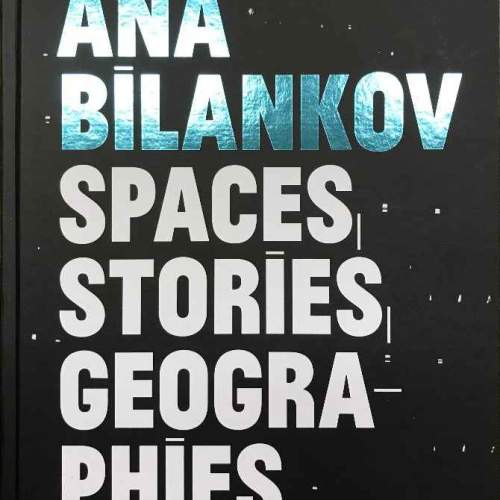 Ana Bilankov's first comprehensive monograph and at the same time an artist's book is structurally conceived as a kind of experimental film, a non-chronological 'storyboard' of her conceptual art works made in the media photography, video / experimental film, installation and text in the last twenty years. Structured into ten chapters, the book raises a series of questions on the subject of poetics/politics of dislocation, migration, nomadism, individual and collective memory and construction of identity within "in-between-ness". Many projects have emerged in diverse geographic contexts thanks to several international residencies in different European cities, Moscow and New York, or in both of the author's hometowns, Zagreb and Berlin. The book includes rich photographic and video material as well as the texts written by the author and also two theoretical essays: "Some Future Film" by the art theorist Leonida Kovač and "The Poetry and Revolution of Ana Bilankov" by the film theorist and philosopher Marijan Krivak, and has been designed by Hamper studio Zagreb. Author: Ana Bilankov Publisher: Hamper studio Zagreb Year: 2019 Hard cover, 223 pages Language: English, Croatian Dimensiones: 29 x 23 cm ISBN: 978-953-48548-0-8
 -
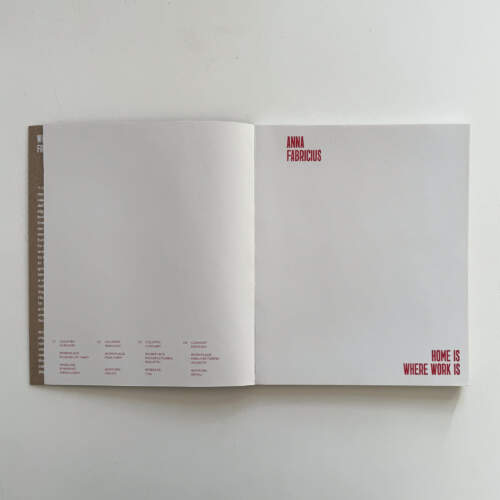
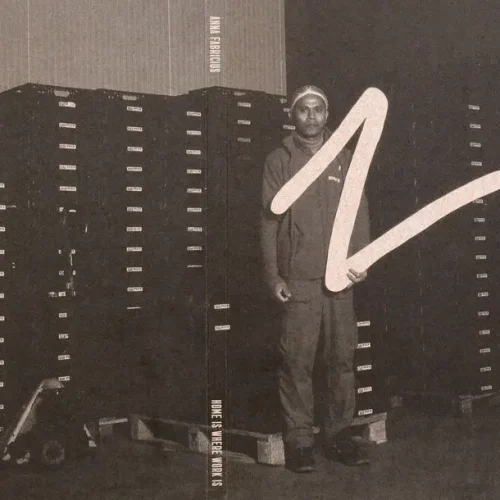 WHAT CAN WE LEARN FROM FOREIGN WORKERS? Anna Fabricius has been researching the changing cultural and personality-shaping role of work for years and is currently investigating the increasingly common transnational family relationships resulting from the global division of labour. She has been collaborating with workers from the Far East (Nepal, Myanmar Thailand, Philippines, India), like Insiyatul Urbayanti, who have been employed for shorter or longer periods in agriculture or in the manufacturing industry. The majority of them are young, poor men and women whose daily lives are charac-terised by restricted freedom of movement, strict daily schedules and low wages. There is a constant migration of labour between the poorer and richer regions of the world, and Hungary is also involved in this exchange both as host and exporter. The project titled "Home Is Where Work Is" addresses some of the most pressing issues of our time, where the discourse on human rights is accompanied by restrictive immigration regulations. In this respect, the title of the project carries several mean-ings. We can conceive of work as an instrument of power that forces people to leave their homes, determines their living spaces, their daily rhythms and their personal relationships. The title also addresses the insecurities of the transitory situation in which one cannot feel at home in their place of birth or in their place of work. Lastly, it refers to the dilemmas between moneymaking work and care work to maintain the family home, and thus to the tensions between the economy, society and the reproduction of culture. Тext: Judit Csatlós, Tibor Meszmann Translation: Dániel Sipos Graphic Design: Adrienn Császar Printing House: EPC ISBN: 978-615-02-1329-3
 -
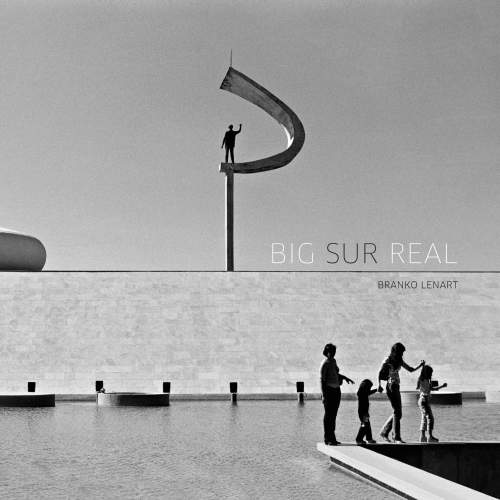 Big Sur Real. In his latest book project, Branko Lenart has focused on the process of choice as a creative act. He has collected 119 photographs from 1970 to 2020 under the title "BIG SUR REAL". Branko Lenart (1948, Ptuj, Slovenia) was born in the former Yugoslavia, but his family emigrated to nearby Austria when he was six years old. He studied pedagogy in Graz and in 1968 became a member of the photography section of the Graz art association Forum Stadtpark, from which Camera Austria later emerged. Until 2007 he was active as a lecturer in photography at the Graz Higher State School of Art and Design (1979 - 2007) and at the Joanneum University of Applied Sciences in Graz (1996 - 2003). Lenart is an internationally renowned photographer who has travelled extensively around the world since his youth, often staying at artist residencies such as the Apeiron Workshops in Millerton, New York, La Rochelle, Arles, Oxford, Rome, Paris and London. His oeuvre is divided between documentary and conceptual auteur photography. He has paid particular attention to the social periphery, to members of the former urban counterculture or rural society, and has coined the term "subjective topography" for this type of photography. Photographs by Branko Lenart Editor: Günther Friesinger Selection of reproductions: Janez Korošin, Primož Lampič Text: Marjeta Ciglenečki, Günther Holler-Schuster Readings: Bokmal Read by Evelyn Fürlinger Year of publication: 2023 Hardcover, 152 pages ISBN: 978-3-902796-89-9
 -
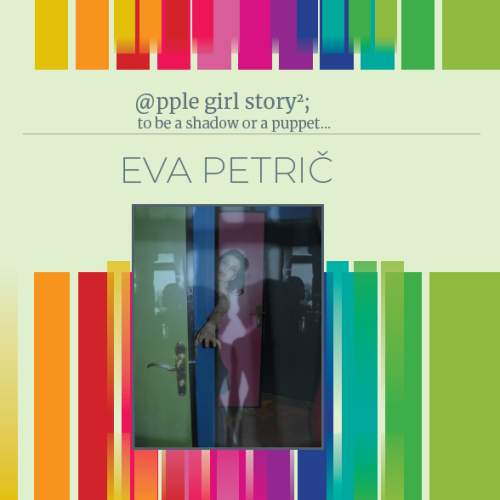 NEW!What will our world be like without emotions, and will anyone even miss them? This question, provoked by the concern that life in current circumstances of constant digital connectivity and instant “likes” and emoticons” is heading into a state where emotions are increasingly losing their role and are retreating into cliches, has motivated the visual artist and author Eva Petrič to create ”@apple girl story 2 ; to be a shadow or a puppet…”. The multilayered story and its book is a hybrid by its content as well as its form. It is a hybrid of a literary story, switching between a fairytale and a contemporary email dairy, and the visual dictionary of emotions among which many are on the brink of extinction. The text itself is a hybrid mitigating between images and sentences, spread out over paper of different colors in ways where sentences form visual images. By depicting figures in their material forms of bodies as well as in their immaterial forms as shadows, the book enables viewers various ways of perception and possibilities of creating one’s own stories. Eva Petrič is a transmedia artist, known for her creative use of photography, interweaving with other media, exploring with it the language of shadows, decoding our existence on ephemeral levels. Her motivation to expose the multidimensional architecture of space, defined by atmosphere, lead her to apply a trans medial approach in her art. Author: Eva Petrič Foreword: Olga Butinar Čeh 23 cm x 23 cm 358 pages, hardcover
 -
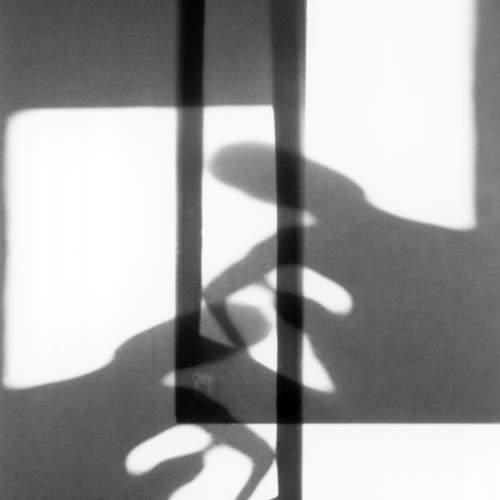 NEW!Limited Edition Print // Edition of 50 Photon Gallery Exclusive The photograph is printed on Ilford archival semi-matte 290g paper. The entire edition is printed with a white border (1,5 cm) in the dimension 48 x 39 cm (including the white border). With each print, you will receive a certificate of authenticity.
 -
 NOVO!Limited Edition Print // Edition of 50 Photon Gallery Exclusive The photograph is printed on Ilford archival semi-matte 290g paper. The entire edition is printed with a white border (1,5 cm) in the dimension 48 x 39 cm (including the white border). With each print, you will receive a certificate of authenticity.
 -
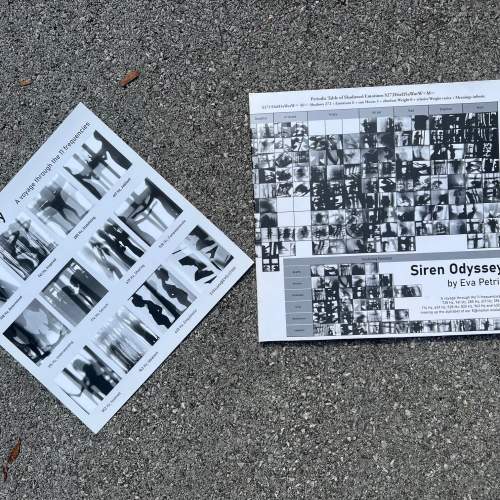
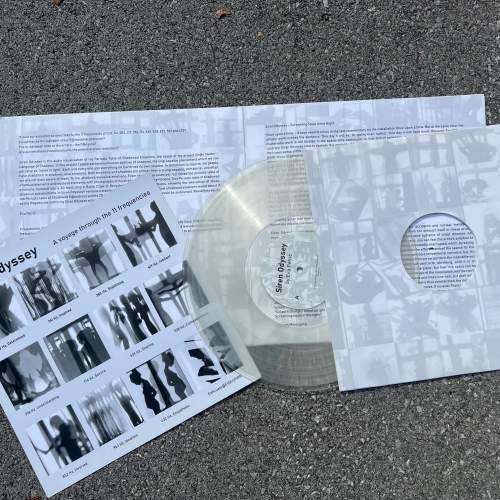 NEW!Siren Odyssey - A voyage through the 11 frequencies of: 728, 741, 285, 417, 396, 174, 639, 528, 825, 963 and 432, making up the alphabet of our E@motion evolution. Could they be the alphabet of our emotional evolution? The in-between links or the errors – the DNA junk? Are our emotions evolutional junk, the potential of our evolution? Syren Oddissey is an audio visualization of my Periodic Table of Shadowed Emotions, the result of Eva's project Gr@y Matter – Language of Shadows. Frequencies of pitch have been associated with different moods, and the earth and the human body have different resonant frequencies associated with them. For the individual selected frequencies in Siren Odyssey, Eva tried to find textures and grooves that complemented the particular frequencies that were presented to her. The sounds you hear are all tuned to be consonant with the base frequency and therefore should amplify the feeling associated with that particular frequency. Vinyl record in sleeve. Text: Dr.Thomas Miessgang Vocals, lyrics, sound, composition and concept: Eva Petrič Sound production and synthesizer: Mydeck 2000 NYC Scene: installation of recycled lace assemblages by Eva Petrič Video projections: Eva Petrič Performance: Eva Petrič An A4 fine art print of all the shadow images is added, representing the 11 frequencies.
 -
Sale!
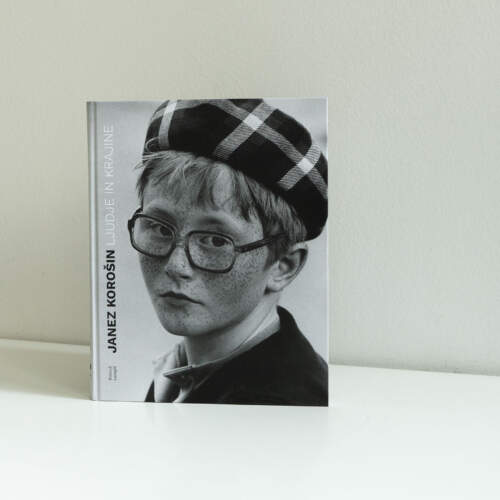
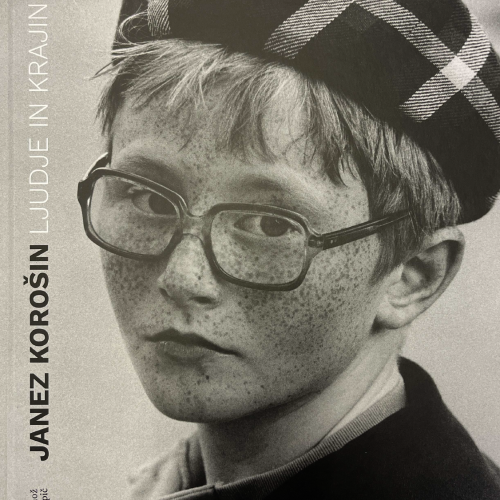 SALE!The photographic monograph Janez Korošin - People and Landscapes (black and white photographs 1960-2015) by Primož Lampič provides an overview of the work of photographer Janez Korošin. Janez Korošin (1935, Ljubljana) started taking photographs at the age of 17 in the Fotoklub Ravne na Koroškem under the mentorship of František Kamnik. He worked as a chemical technician at the Ravne Ironworks, and after completing his military service he joined the Jože Stefan Institute in Ljubljana, where he met the renowned photographer Marjan Smerket, who introduced him to exhibition photography. He began to work more seriously as a photographer in the mid-1960s. In 1966, he became a member of the Fotoklub Ljubljana and Fotogrupa Šolt, which merged in 1968 to form Fotogrupa Ljubljana Šolt, where some of the most prominent local photographers of the time worked. Later he also became a member of the Slovenian Photographers' Association. He has also received numerous international awards and prizes for his photographic work. In 1977, the Photographic Association of Yugoslavia awarded him the title of Master of Photography, and in 1996, the Photographic Association of Slovenia honoured him with the Janez Puhar Lifetime Achievement in Photography Award. In 2000, he was awarded the title "FIAP Excellency" by the International Photographic Association FIAP. "Because of photography's primary ability to record visible reality as the eye does, realism is always relevant in the medium. It is also the foundation of Korošinov's work. I hardly find any radical interventions in his work.
 -
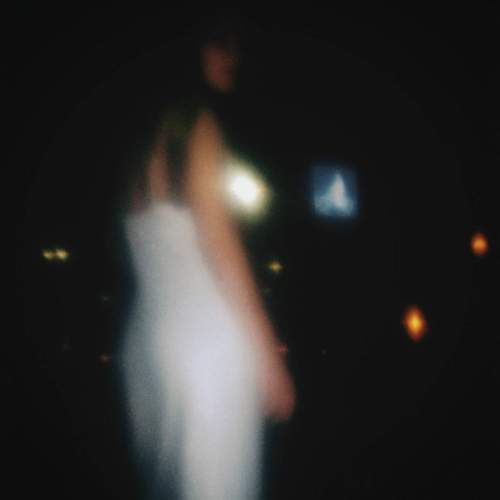 Nicole Brandstaetter (2001) is a Vienna-based artist whose work spans the fields of photography, storytelling, fashion and design. Since 2019, her photographic practice has been driven by a relentless pursuit of aesthetics, capturing the intricate interplay between visual appeal and narrative depth. Her public recognition began in 2020 with exhibitions at prestigious venues such as the Academy of Fine Arts. With a background in photography and audiovisual studies, her distinctive style and thematic exploration has been featured in various online magazines and recognized by designers in Vienna and the wider German-speaking community. The artist, who grew up in two different cultures - Austrian and American - is deeply intrigued by themes such as self-expression, transience and longing. These interests feed into her work, adding layers of meaning and resonance that invite the viewer to engage with the deeper narratives woven into her photographs. Her ability to integrate design and fashion into her photography has created a powerful visual language that captures the essence of contemporary artistic expression. In the photograph, rain pours down on the lens of my camera, creating this beautiful and abstract image of a silhouette in a white dress in the city of Milan. Amidst the dark streets, the glow of distant streetlights resembles a scattering of luminous dots. - Edition of 6 prints, sized 20x30 and printed on semi-Matt archival paper.
 -
 NEW!
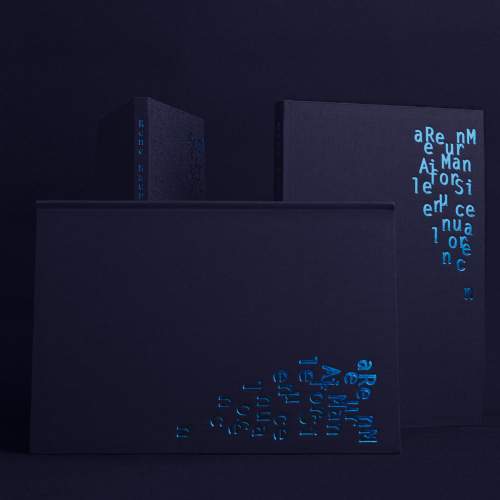
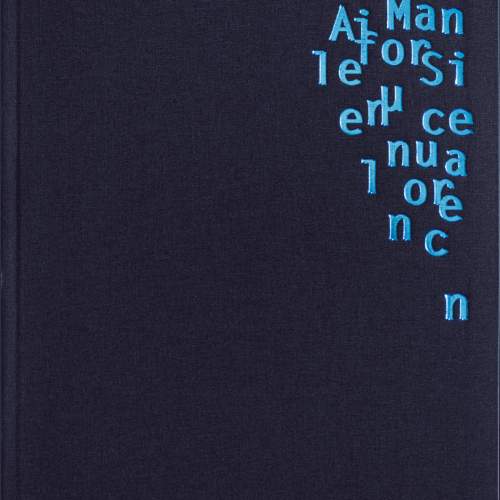
NEW!A Manual for Silence is a photo-text booklet based on an ongoing sequence of photographs bearing the same title. Images may tell the narrative, the testimony, via its absence — the vacancy of the subject. Text conjures images by beleaguering the unspeakable — pasting words and sentences onto the invisible form until it reveals a wireframe of the object.
Perhaps there — behind this impediment, the existence of it all is to be found. In the failed correspondence of mumbling planes and shards of breached conventions. In the imminent erosion of understanding, solely a silent touch can soothe.
Author: Rene Maurin Publisher: Generator Year: 2019 Hard cover, 112 pages Edition: 300 copies Language: English Dimensions: 24 x 17 cm ISBN: 9789612907303 -
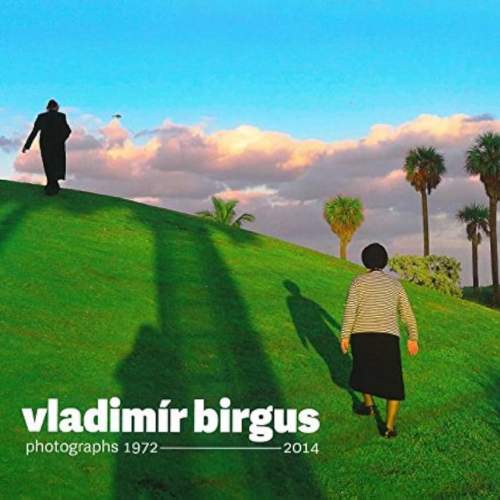 Vladimír Birgus is a photographer, curator, historian of photography, professor and head of the Institute of Creative Photography at the Silesian University in Opava. As early as the early 1980s, he was one of the first Czech photographers who tried to make thoughtful use of the emotional and psychological effects of colour in subjectively conceived documentary images, which were produced in parallel with his black and white work. Birgus's photographs in the book are accompanied by only brief information about the year and place of their creation; the various ways of interpretation are entirely up to the viewer and their willingness to mentally engage. As the years pass, his works are more and more accompanied by the motif of melancholy and the principle of counterpoint, striving for the surrealism of impressive scenery as well as the application of metaphor and symbolism. In many confrontations of people with their environment or in response to various coexisting stories, exposed in a split second in the scenery of the lived present, he alienates the micro-stories of human existence. Photos: Vladimír Birgus Text: Štěpánka Bieleszová Translation: Derek & Marzia Paton Design: Petr Šmalec Publisher: KANT in cooperation with the Olomouc Museum of Art Hardcover, 179 pages ISBN-10:8087149750 ISBN-13: 978-8087149751
 -
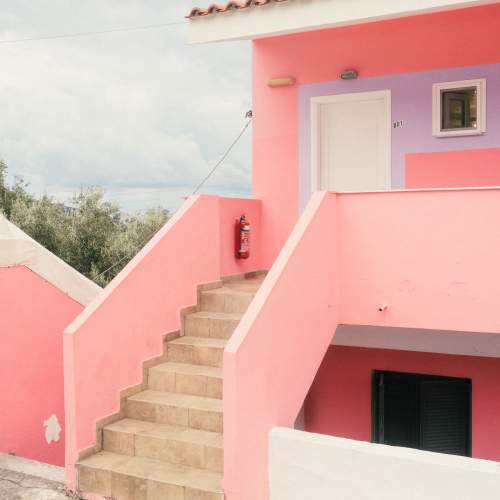 NEW!Luka Hernet (1998) is a younger-generation photographer from Maribor. Since 2018, he has worked across documentary, portrait, reportage, and concert photography. The series Somewhere, Somehow / Nekje, nekako brings together photographs taken in various locations during the most recent period of his artistic practice. Seemingly unrelated scenes, abandoned objects, traces of human presence, unusual interventions in the landscape, and subtle departures from the order of everyday life, come together in an open-ended visual narrative about transience, chance, and the fragility of the environment. Hernet is particularly interested in moments when the ordinary world briefly becomes unfamiliar, ambiguous, or almost surreal. The series SOMEWHERE, SOMEHOW / NEKJE, NEKAKO consists of photographs taken by Luka Hernet in various locations and at different stages of his career. Seemingly unrelated scenes—abandoned objects, traces of human presence, unusual interventions in the landscape, and subtle deviations from the everyday order—come together to form an open-ended visual narrative about transience, chance, and the fragility of the environment. Hernet is particularly interested in moments when the ordinary world briefly becomes alien, ambiguous, or almost surreal. The photographs are characterized by a blend of a documentary perspective and a distinct aesthetic sensibility. The artist shifts between color-saturated images, tranquil landscape scenes, and high-contrast black-and-white shots, yet maintains a consistent focus on the tension between gentleness and unease, order and chaos, presence and disappearance. Somewhere, Somehow is not so much a record of a specific space as it is a personal map of fleeting encounters with a world that is constantly changing and eludes definitive interpretation. The print run is 10 copies, the photograph measures 40 x 50 cm and is digitally printed on 230g matte paper.
 -
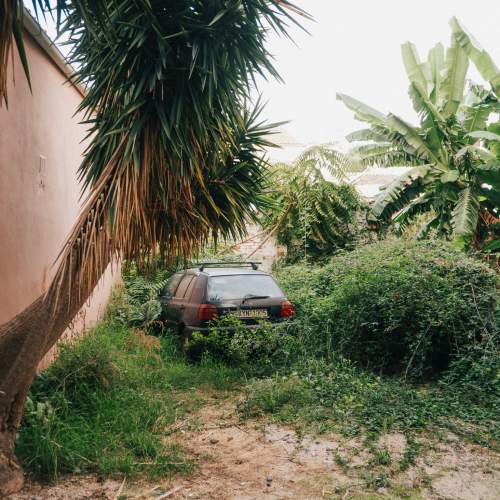 NEW!Luka Hernet (1998) is a younger-generation photographer from Maribor. Since 2018, he has worked across documentary, portrait, reportage, and concert photography. The series Somewhere, Somehow / Nekje, nekako brings together photographs taken in various locations during the most recent period of his artistic practice. Seemingly unrelated scenes, abandoned objects, traces of human presence, unusual interventions in the landscape, and subtle departures from the order of everyday life, come together in an open-ended visual narrative about transience, chance, and the fragility of the environment. Hernet is particularly interested in moments when the ordinary world briefly becomes unfamiliar, ambiguous, or almost surreal. The series SOMEWHERE, SOMEHOW / NEKJE, NEKAKO consists of photographs taken by Luka Hernet in various locations and at different stages of his career. Seemingly unrelated scenes—abandoned objects, traces of human presence, unusual interventions in the landscape, and subtle deviations from the everyday order—come together to form an open-ended visual narrative about transience, chance, and the fragility of the environment. Hernet is particularly interested in moments when the ordinary world briefly becomes alien, ambiguous, or almost surreal. The photographs are characterized by a blend of a documentary perspective and a distinct aesthetic sensibility. The artist shifts between color-saturated images, tranquil landscape scenes, and high-contrast black-and-white shots, yet maintains a consistent focus on the tension between gentleness and unease, order and chaos, presence and disappearance. Somewhere, Somehow is not so much a record of a specific space as it is a personal map of fleeting encounters with a world that is constantly changing and eludes definitive interpretation. The print run is 10 copies, the photograph measures 40 x 50 cm and is digitally printed on 230g matte paper.
 -
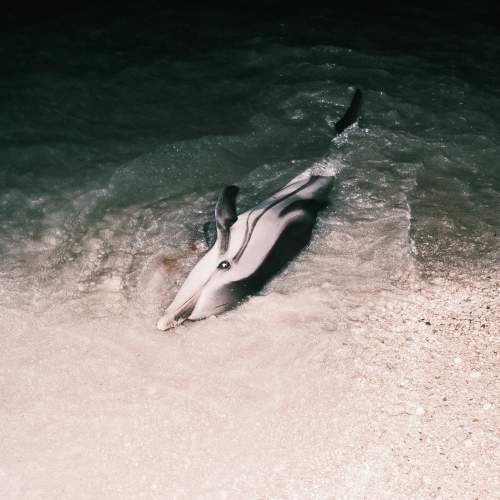 NEW!Luka Hernet (1998) is a younger-generation photographer from Maribor. Since 2018, he has worked across documentary, portrait, reportage, and concert photography. The series Somewhere, Somehow / Nekje, nekako brings together photographs taken in various locations during the most recent period of his artistic practice. Seemingly unrelated scenes, abandoned objects, traces of human presence, unusual interventions in the landscape, and subtle departures from the order of everyday life, come together in an open-ended visual narrative about transience, chance, and the fragility of the environment. Hernet is particularly interested in moments when the ordinary world briefly becomes unfamiliar, ambiguous, or almost surreal. The series SOMEWHERE, SOMEHOW / NEKJE, NEKAKO consists of photographs taken by Luka Hernet in various locations and at different stages of his career. Seemingly unrelated scenes—abandoned objects, traces of human presence, unusual interventions in the landscape, and subtle deviations from the everyday order—come together to form an open-ended visual narrative about transience, chance, and the fragility of the environment. Hernet is particularly interested in moments when the ordinary world briefly becomes alien, ambiguous, or almost surreal. The photographs are characterized by a blend of a documentary perspective and a distinct aesthetic sensibility. The artist shifts between color-saturated images, tranquil landscape scenes, and high-contrast black-and-white shots, yet maintains a consistent focus on the tension between gentleness and unease, order and chaos, presence and disappearance. Somewhere, Somehow is not so much a record of a specific space as it is a personal map of fleeting encounters with a world that is constantly changing and eludes definitive interpretation. The print run is 10 copies, the photograph measures 40 x 50 cm and is digitally printed on 230g matte paper.
 -
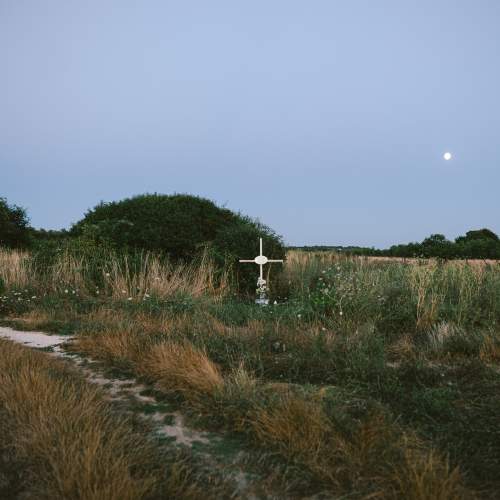 NEW!Luka Hernet (1998) is a younger-generation photographer from Maribor. Since 2018, he has worked across documentary, portrait, reportage, and concert photography. The series Somewhere, Somehow / Nekje, nekako brings together photographs taken in various locations during the most recent period of his artistic practice. Seemingly unrelated scenes, abandoned objects, traces of human presence, unusual interventions in the landscape, and subtle departures from the order of everyday life, come together in an open-ended visual narrative about transience, chance, and the fragility of the environment. Hernet is particularly interested in moments when the ordinary world briefly becomes unfamiliar, ambiguous, or almost surreal. The series SOMEWHERE, SOMEHOW / NEKJE, NEKAKO consists of photographs taken by Luka Hernet in various locations and at different stages of his career. Seemingly unrelated scenes—abandoned objects, traces of human presence, unusual interventions in the landscape, and subtle deviations from the everyday order—come together to form an open-ended visual narrative about transience, chance, and the fragility of the environment. Hernet is particularly interested in moments when the ordinary world briefly becomes alien, ambiguous, or almost surreal. The photographs are characterized by a blend of a documentary perspective and a distinct aesthetic sensibility. The artist shifts between color-saturated images, tranquil landscape scenes, and high-contrast black-and-white shots, yet maintains a consistent focus on the tension between gentleness and unease, order and chaos, presence and disappearance. Somewhere, Somehow is not so much a record of a specific space as it is a personal map of fleeting encounters with a world that is constantly changing and eludes definitive interpretation. The print run is 10 copies, the photograph measures 40 x 50 cm and is digitally printed on 230g matte paper.
 -
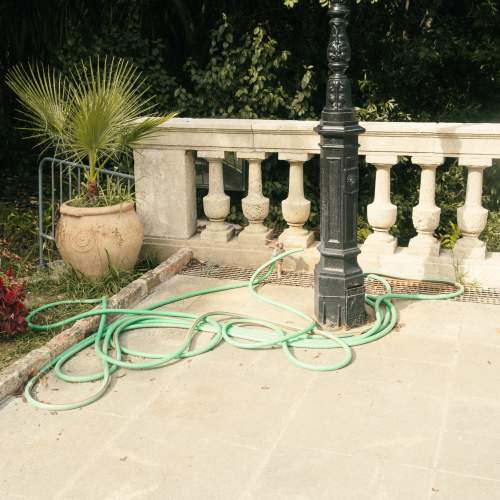 NEW!Luka Hernet (1998) is a younger-generation photographer from Maribor. Since 2018, he has worked across documentary, portrait, reportage, and concert photography. The series Somewhere, Somehow / Nekje, nekako brings together photographs taken in various locations during the most recent period of his artistic practice. Seemingly unrelated scenes, abandoned objects, traces of human presence, unusual interventions in the landscape, and subtle departures from the order of everyday life, come together in an open-ended visual narrative about transience, chance, and the fragility of the environment. Hernet is particularly interested in moments when the ordinary world briefly becomes unfamiliar, ambiguous, or almost surreal. The series SOMEWHERE, SOMEHOW / NEKJE, NEKAKO consists of photographs taken by Luka Hernet in various locations and at different stages of his career. Seemingly unrelated scenes—abandoned objects, traces of human presence, unusual interventions in the landscape, and subtle deviations from the everyday order—come together to form an open-ended visual narrative about transience, chance, and the fragility of the environment. Hernet is particularly interested in moments when the ordinary world briefly becomes alien, ambiguous, or almost surreal. The photographs are characterized by a blend of a documentary perspective and a distinct aesthetic sensibility. The artist shifts between color-saturated images, tranquil landscape scenes, and high-contrast black-and-white shots, yet maintains a consistent focus on the tension between gentleness and unease, order and chaos, presence and disappearance. Somewhere, Somehow is not so much a record of a specific space as it is a personal map of fleeting encounters with a world that is constantly changing and eludes definitive interpretation. The print run is 10 copies, the photograph measures 40 x 50 cm and is digitally printed on 230g matte paper.
 -
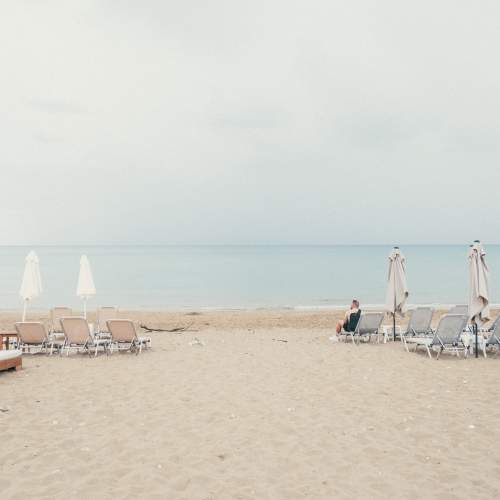 NEW!Luka Hernet (1998) is a younger-generation photographer from Maribor. Since 2018, he has worked across documentary, portrait, reportage, and concert photography. The series Somewhere, Somehow / Nekje, nekako brings together photographs taken in various locations during the most recent period of his artistic practice. Seemingly unrelated scenes, abandoned objects, traces of human presence, unusual interventions in the landscape, and subtle departures from the order of everyday life, come together in an open-ended visual narrative about transience, chance, and the fragility of the environment. Hernet is particularly interested in moments when the ordinary world briefly becomes unfamiliar, ambiguous, or almost surreal. The series SOMEWHERE, SOMEHOW / NEKJE, NEKAKO consists of photographs taken by Luka Hernet in various locations and at different stages of his career. Seemingly unrelated scenes—abandoned objects, traces of human presence, unusual interventions in the landscape, and subtle deviations from the everyday order—come together to form an open-ended visual narrative about transience, chance, and the fragility of the environment. Hernet is particularly interested in moments when the ordinary world briefly becomes alien, ambiguous, or almost surreal. The photographs are characterized by a blend of a documentary perspective and a distinct aesthetic sensibility. The artist shifts between color-saturated images, tranquil landscape scenes, and high-contrast black-and-white shots, yet maintains a consistent focus on the tension between gentleness and unease, order and chaos, presence and disappearance. Somewhere, Somehow is not so much a record of a specific space as it is a personal map of fleeting encounters with a world that is constantly changing and eludes definitive interpretation. The print run is 10 copies, the photograph measures 40 x 50 cm and is digitally printed on 230g matte paper.
 -
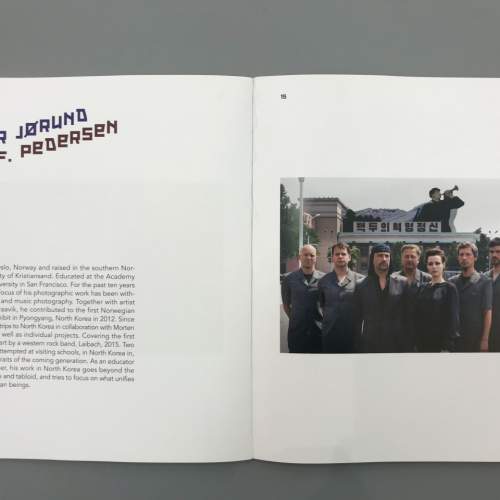
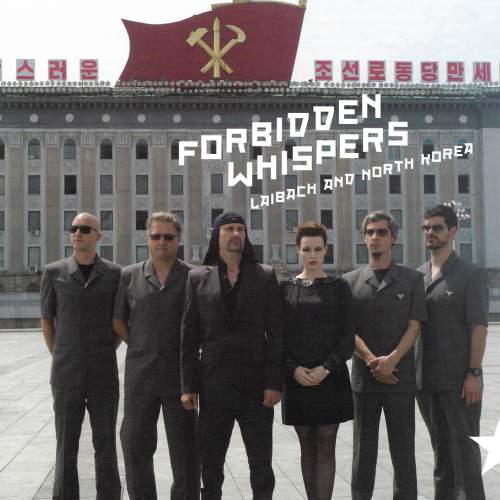 In August 2015, the musical group Laibach traveled to North Korea to perform at two consecutive concerts in Pyongyang as a part of the 70th anniversary of the liberation of the Korean Peninsula. A Norwegian film director, activist, and artist Morten Traavik made a documentary film on the groups’ visit entitled Liberation Day, which premiered at the beginning of 2017. Both the tour and the filming process produced a large number of additional photographs, of both documentary and artistic nature, a selection of which is presented in this catalogue. Author / editor: Dejan Sluga Publisher: Photon – Centre for Contemporary Photography Year: 2018 Language: English, Slovene Dimensions: 24 x 20 cm ISBN: 978-961-92744-8-4
 -
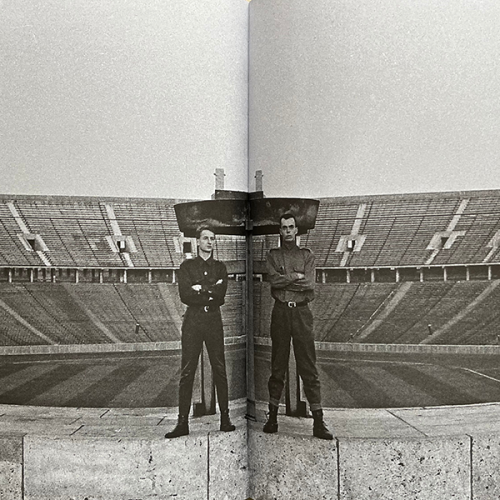
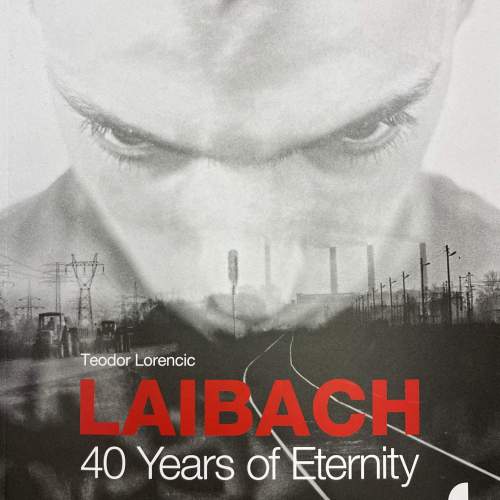 A photo-monograph about Laibach's break-through of the Iron Curtain and deconstruction of Western consumerism, is a "road movie" story about their 1983 Occupied Europe tour. After more than 40 years, this monograph is the first time you can see the never-before-published photographs from Austria, Hungary, East and West Germany, Poland, the Netherlands and England, collected by Theodor Lorenčič during the tour. His documentary photographs are more for reading than looking, and clearly show the bold artistic concept that emerged from the "dehumanised" world that Laibach harshly criticised. Laibach's name, symbols and performances have always been a provocation. Through thoughtful performances with engaging music, they have expressed their attitude towards the modern world. Their art is not innocent, but at the same time they cannot be blamed for using iconography to portray the apocalyptic mood of history.
Photographs: Teodor Lorenčič, Andrew Catlin Text: Teodor Lorenčič Graphic design: Ivan Jocić, Mirko Trbusić Publisher: Službeni glasnik (Public Enterprise) Editor: Gordana Milosavljević Stojanović year: 2022 Soft covers, 192 pages Language: English Dimensions: 22,5 x 27,5 cm
ISBN: 978-86-519-2784-6
-
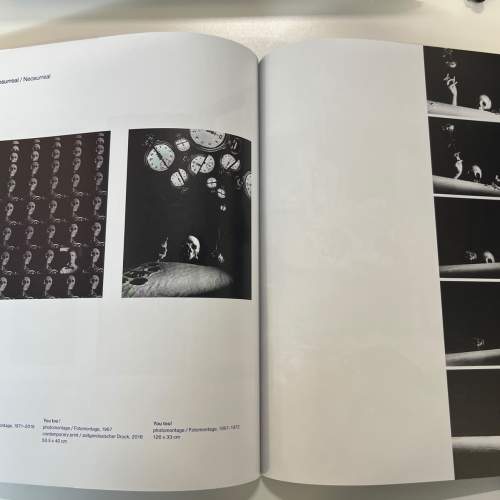
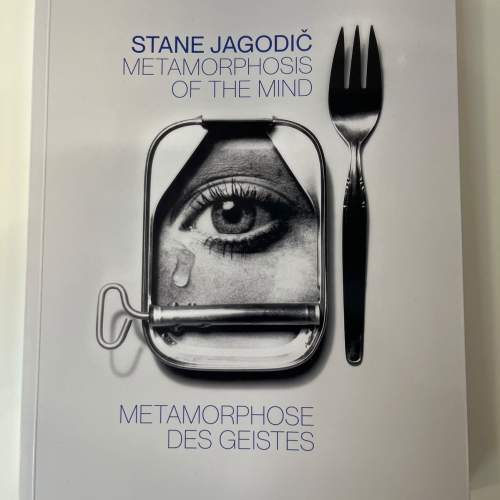 As an artist, Stane Jagodič (1943, Slovenia) has been active in various fields, media and contexts of visual art since the mid-1960s. After graduating from the Academy of Fine Arts in Ljubljana in 1970, he soon became one of the most active and prominent artists in Yugoslavia, due to his distinguishable artistic expression. In his continuously developing body of work, he has adopted several different concepts of artistic production using various artistic media such as photography, painting, graphics, cartoons, performance, assemblages and object art (installations). Ever since 1967 Stane Jagodič has been exploring artistic photography and some of its creative derivates like photomontage and photo collage, which are the most significant in his artistic production. Stane Jagodič was a co-founder and conceptual leader of Grupa Junij, active between 1970 and 1985. It worked as a broad artistic platform that included a number of prominent local and international artists. As an independent artist, Stane Jagodič participated in more than 50 solo and more than 200 group exhibitions worldwide. He lives and works in Ljubljana. The catalogue Metamorphosis of the Mind was published on the occasion of a major retrospective exhibition by Stane Jagodič at the Künstlerhaus in Vienna. More information about the exhibition can be found here. Publisher: Museum and Galleries of the City of Ljubljana / Mestna galerija Ljubljana Editors: Barbara Sterle Vurnik, Dr. Sarival Sosič Texts: Barbara Sterle Vurnik, Dr. Lev Menaše, Dejan Sluga Design and layout: Kabinet 01 Printing: Collegium Graphicum d. o. o., Ljubljana DA tisk, Ljubljana Printing: 230
 -

 Branko Lenart has been distributing art photo postcards by regular mail since 1976, that is, for fifty years. He sent the first one from Arles, France, and so far, there have been well over a hundred of them. It is a black-and-white analog photograph, usually 10 × 15 cm in size, which is equipped on the back like a postcard, i.e. with a line for the recipient’s address and a space for a message. The recipient’s postal address is always written by hand, and a piece of paper with typed text is glued to the message area. This small but thoughtfully designed piece of mail is not only a personal greeting from the journey, but also part of a long-term artistic project in which the photograph, word, postmark and selected stamp together form a comprehensive message. Lenart often uses quotes from writers, musicians or other creators, which he connects with the visual motif of the photograph, thus creating a multi-layered play of meanings. His postcards are therefore at the same time a document of his travels, an intimate contact with his addressees, and a subtle form of mail art that has accompanied his photographic work for five decades. The exhibition - Branko Lenart : LEN / MailART at the Photon Gallery featured the original postcards as well as some enlargements of the text pages. The exhibition also featured the newest monograph of the same title with a text by dr. Marjeta Ciglenečki. Branko Lenart (1948, Slovenia) was born in former Yugoslavia and later migrated to neighbouring Austria with his family at 6 years of age. He studied pedagogy in Graz. In 1968 he became a member of the avant-garde art society Forum Stadtpark, that later grew into Camera Austria. He thought photography at the College of Art and Design (1979 – 2007) and the Technical College Joanneum (1996 – 2003) in Graz. Lenart is an internationally renowned photographer, who has widely travelled across the world ever since his youth. He attended various artist residencies like Apeiron Workshops in Millerton, New York, La Rochelle in Arles, France, and others in Oxford, Rome, Paris and London. His oeuvre sits between documentary and conceptual art photography. He dedicated his attention to the margins of society, be it the members of urban counter-cultures at the time or to the social conditions in the country and the peripheries. This genre of photography became to be known as “subjective topography”. Text: Marjeta Ciglenečki Proofreading: Darja Grobovšek Homšak Translation: Sebastian Walcher Design: Anika Kronberger, Erwin Wagner Printed by: Demago, Maribor
 -
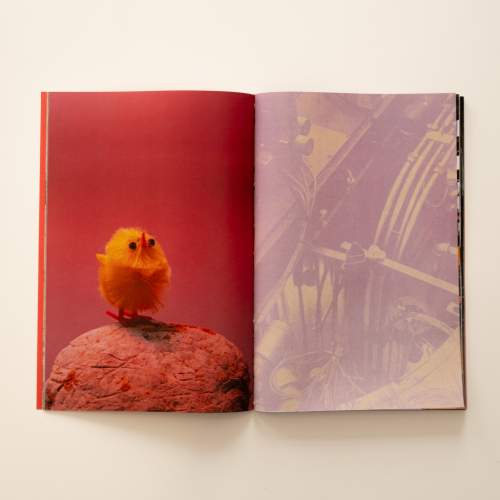
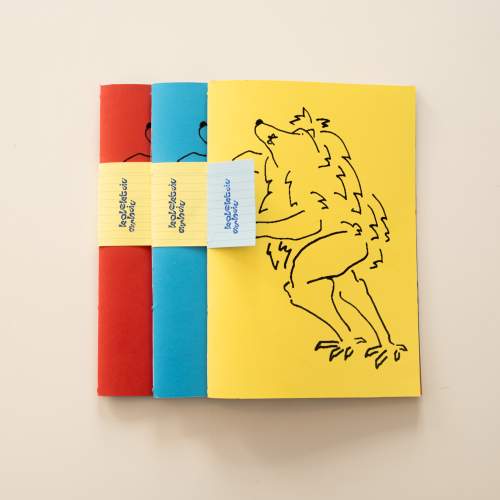 Arhiv Kolektiv (2023–) is a multidisciplinary group consisting of (fairly) young artists, designers and a philosopher-sociologist. It consists of Tim Topić, Jernej Strmšek, Rene Ketiš, Lan Rahne, Eva Anzeljc and Ana Rogač. They were founded organically through the production process of their debut ‘Sterilni študent’ (2024, mentored by Assoc. Prof. Peter Koštrun, UL ALUO, and Prof. Dr. Mladen Dolar, UL FF), which was published by UL ALUO in 2024. The release was accompanied by an exhibition and a series of events at the Kamera Kina Šiška Gallery, and later the concept was also adapted for the group study exhibition ‘Curative Connections’ at the City Gallery Nova Gorica (2025, curated by Maša Žekš). The project was well received by both the general and professional public. The published catalogue is part of the previous process exhibition Nine to Five, representing an intermediate step in the broader project Kolektiv Arhiv, which explores the visual and spatial manifestations of industrial and energy infrastructure in Slovenia. Eleven to seven: catalogue of the process exhibition Nine to Five Editors: Eva Anzeljc, Rene Ketiš, Lan Rahne, Ana Rogač, Jernej Strmšek, Tim Topić Texts: Lan Rahne, Ana Rogač, Tim Topić Photos: Eva Anzeljc, Rene Ketiš, Lan Rahne, Ana Rogač, Jernej Strmšek, Tim Topić Drawings: Eva Anzeljc, Jernej Strmšek Design: Kolektiv Arhiv Technique: zine Proofreading: Lan Rahne Published by: Academy of Fine Arts and Design, Ljubljana, April 2026 Printed by: UL ALUO Pressing: 3 copies
 -
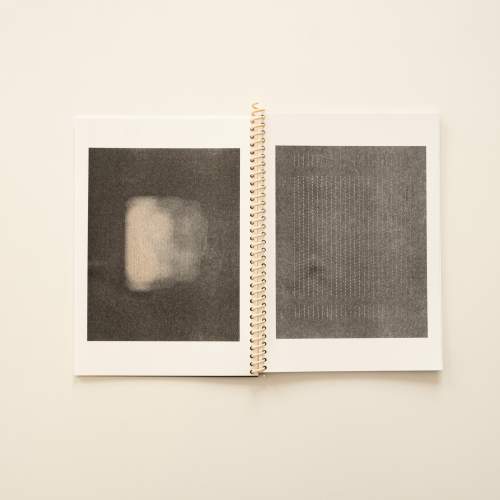
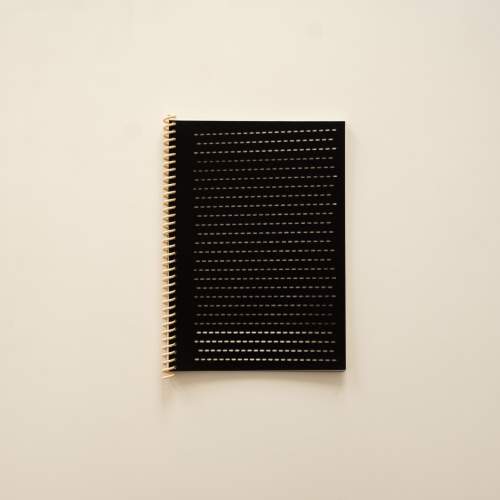 Tim Topić (2002) works primarily in the fields of photography, graphics, spatial installations, sound and graphic design, which he is currently studying at the Academy of Fine Arts and Design, University of Ljubljana. He is currently interested in memory, its conception, spatial perceptions and manipulation of all of the above. He regularly collaborates with the DobraVaga Gallery, and has also exhibited in groups at the Photon Gallery, SEM, PMS, Kino Šiška, MOL City Hall and at the exhibition of the Photography Department Ponjava 4. He has had solo exhibitions at DobraVaga, Kino Šiška, MOL City Hall and the Small Gallery of the Bank of Slovenia. As part of the Kolektiv Arhiv, he co-published the art publication Sterile Student in 2024. He is the winner of the 9th ZineVitrine call.Tehnique: zineDimensions: 14 x 21 cmYear: 2025