-
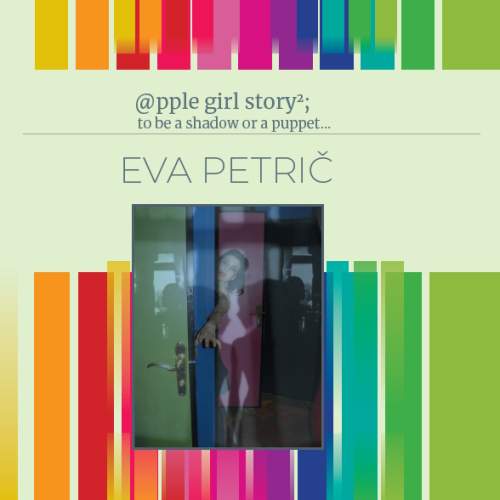 NEW!What will our world be like without emotions, and will anyone even miss them? This question, provoked by the concern that life in current circumstances of constant digital connectivity and instant “likes” and emoticons” is heading into a state where emotions are increasingly losing their role and are retreating into cliches, has motivated the visual artist and author Eva Petrič to create ”@apple girl story 2 ; to be a shadow or a puppet…”. The multilayered story and its book is a hybrid by its content as well as its form. It is a hybrid of a literary story, switching between a fairytale and a contemporary email dairy, and the visual dictionary of emotions among which many are on the brink of extinction. The text itself is a hybrid mitigating between images and sentences, spread out over paper of different colors in ways where sentences form visual images. By depicting figures in their material forms of bodies as well as in their immaterial forms as shadows, the book enables viewers various ways of perception and possibilities of creating one’s own stories. Eva Petrič is a transmedia artist, known for her creative use of photography, interweaving with other media, exploring with it the language of shadows, decoding our existence on ephemeral levels. Her motivation to expose the multidimensional architecture of space, defined by atmosphere, lead her to apply a trans medial approach in her art. Author: Eva Petrič Foreword: Olga Butinar Čeh 23 cm x 23 cm 358 pages, hardcover
-
Out of stock
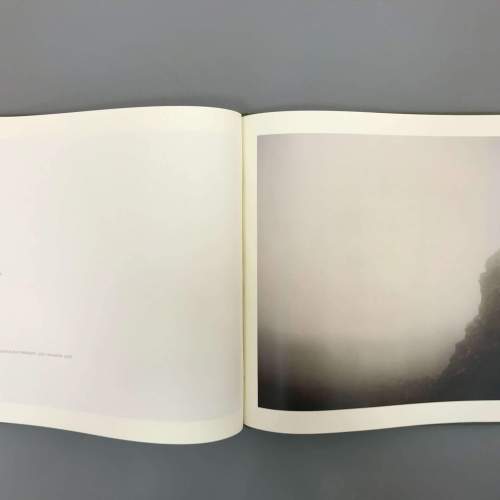
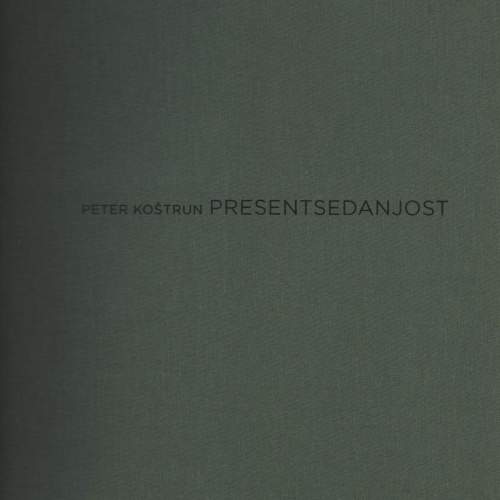 In his limited photographic monograph entitled The Present, Peter Koštrun captures the quiet atmosphere of the countryside in the immediate vicinity of his home. Pastoral motifs are composed in a way of intriguing poetry that is - wrapped in a misty veil of gently lit countryside - receptive to mystical wanderings and silent contemplation. The photo book is available only in edition of 20! Author of photographs: Peter Koštrun Author of text: Dejan Sluga Publisher: self-published Year: 2013 Hardcover, 44 pages Dimensions: 33 x 33 cm Language: english, slovene
FOR ORDERS FROM OUTSIDE OF SLOVENIA PLEASE SEND US EMAIL ON info@photon.si
-
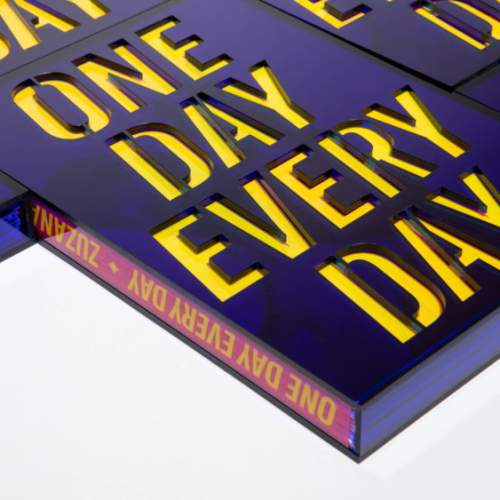
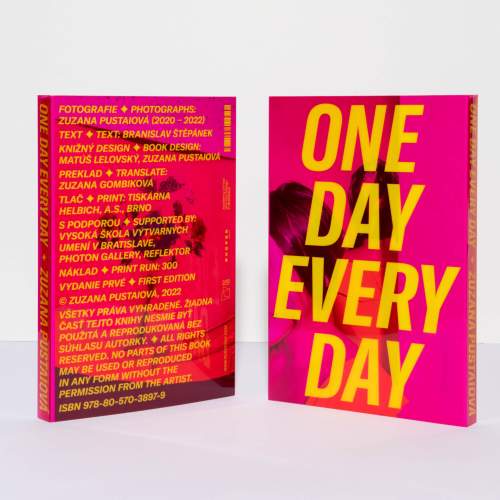 NEW!The debut by Zuzana Pustaiová titled One Day Every Day (2022) is an ironic commentary on various social norms impacting our daily lives. Commonplace routine, gender stereotypes, and role-playing (depicted in the book literally as ‚wearing masks‘) are few examples of cultural code, which, on the one hand, bind the society together, but on the other, it imposes the often unwanted social pressure affecting an individual’s freedom. In this book, the artist seeks the boundary where the (otherwise useful) behavioral patterns become pathological. Exploring the intricate relationship between these patterns and broader social phenomena, the book shows deeper layers of institutional limitations conceived by the policy-makers and relayed to the public by the media and via social networks. It brings the reader’s attention to the point that while striving for a better world, one ought not to forget how the individual feels in the realm of all those recommendations, behests and restrictions, imprinted to one’s mind since an early age and while being brought up, only to find that civilizing imperatives often lead to systematic oppression. The idea of rethinking one’s conviction, when it comes to social norms, is further supported by the ‚Leporello‘ layout, allowing for alternative page juxtapositions. Photographs: Zuzana Pustaiová (2020-2022) Text: Branislav Štěpánek Book design: Matúš Lelovský, Zuzana Pustaiová Print run: 300 + collectors edition of 11 Date of publishing: May 2022 Language: Slovak / English Number of pages: 62 Number of images: 60 Publisher: self-published with Reflektor Supported by: Academy of Fine Arts and Design in Bratislava www.vsvu.sk Photon Gallery www.photon.si Reflektor www.reflektor.org Fond výtvarných umení www.fvu.sk Zoltán Szabó www.raftys.sk Supporters of crowdfunding campaign on www.startlab.sk
-
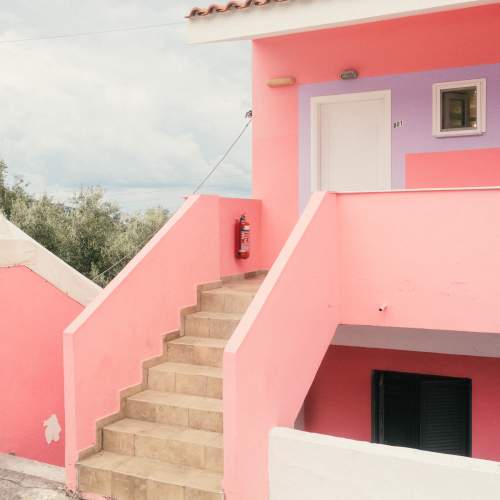 NEW!Luka Hernet (1998) is a younger-generation photographer from Maribor. Since 2018, he has worked across documentary, portrait, reportage, and concert photography. The series Somewhere, Somehow / Nekje, nekako brings together photographs taken in various locations during the most recent period of his artistic practice. Seemingly unrelated scenes, abandoned objects, traces of human presence, unusual interventions in the landscape, and subtle departures from the order of everyday life, come together in an open-ended visual narrative about transience, chance, and the fragility of the environment. Hernet is particularly interested in moments when the ordinary world briefly becomes unfamiliar, ambiguous, or almost surreal. The series SOMEWHERE, SOMEHOW / NEKJE, NEKAKO consists of photographs taken by Luka Hernet in various locations and at different stages of his career. Seemingly unrelated scenes—abandoned objects, traces of human presence, unusual interventions in the landscape, and subtle deviations from the everyday order—come together to form an open-ended visual narrative about transience, chance, and the fragility of the environment. Hernet is particularly interested in moments when the ordinary world briefly becomes alien, ambiguous, or almost surreal. The photographs are characterized by a blend of a documentary perspective and a distinct aesthetic sensibility. The artist shifts between color-saturated images, tranquil landscape scenes, and high-contrast black-and-white shots, yet maintains a consistent focus on the tension between gentleness and unease, order and chaos, presence and disappearance. Somewhere, Somehow is not so much a record of a specific space as it is a personal map of fleeting encounters with a world that is constantly changing and eludes definitive interpretation. The print run is 10 copies, the photograph measures 40 x 50 cm and is digitally printed on 230g matte paper.
-
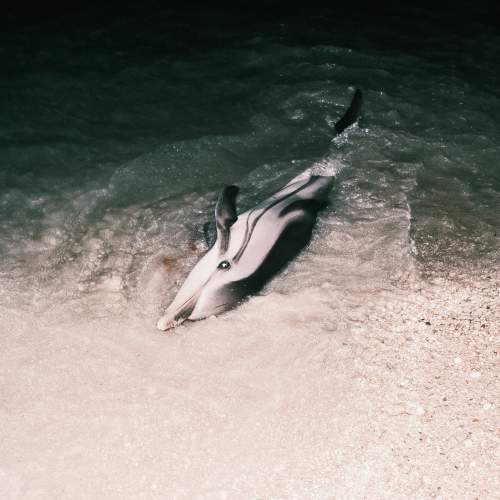 NEW!Luka Hernet (1998) is a younger-generation photographer from Maribor. Since 2018, he has worked across documentary, portrait, reportage, and concert photography. The series Somewhere, Somehow / Nekje, nekako brings together photographs taken in various locations during the most recent period of his artistic practice. Seemingly unrelated scenes, abandoned objects, traces of human presence, unusual interventions in the landscape, and subtle departures from the order of everyday life, come together in an open-ended visual narrative about transience, chance, and the fragility of the environment. Hernet is particularly interested in moments when the ordinary world briefly becomes unfamiliar, ambiguous, or almost surreal. The series SOMEWHERE, SOMEHOW / NEKJE, NEKAKO consists of photographs taken by Luka Hernet in various locations and at different stages of his career. Seemingly unrelated scenes—abandoned objects, traces of human presence, unusual interventions in the landscape, and subtle deviations from the everyday order—come together to form an open-ended visual narrative about transience, chance, and the fragility of the environment. Hernet is particularly interested in moments when the ordinary world briefly becomes alien, ambiguous, or almost surreal. The photographs are characterized by a blend of a documentary perspective and a distinct aesthetic sensibility. The artist shifts between color-saturated images, tranquil landscape scenes, and high-contrast black-and-white shots, yet maintains a consistent focus on the tension between gentleness and unease, order and chaos, presence and disappearance. Somewhere, Somehow is not so much a record of a specific space as it is a personal map of fleeting encounters with a world that is constantly changing and eludes definitive interpretation. The print run is 10 copies, the photograph measures 40 x 50 cm and is digitally printed on 230g matte paper.
-
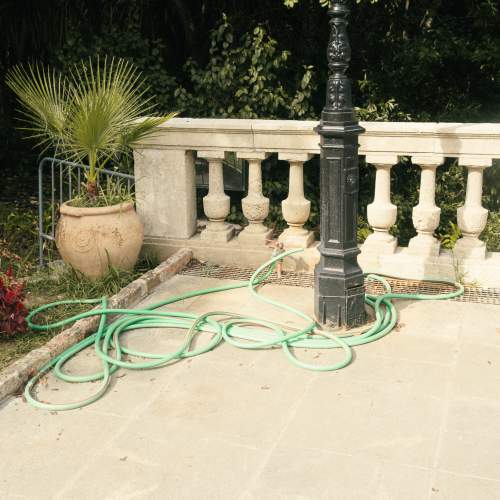 NEW!Luka Hernet (1998) is a younger-generation photographer from Maribor. Since 2018, he has worked across documentary, portrait, reportage, and concert photography. The series Somewhere, Somehow / Nekje, nekako brings together photographs taken in various locations during the most recent period of his artistic practice. Seemingly unrelated scenes, abandoned objects, traces of human presence, unusual interventions in the landscape, and subtle departures from the order of everyday life, come together in an open-ended visual narrative about transience, chance, and the fragility of the environment. Hernet is particularly interested in moments when the ordinary world briefly becomes unfamiliar, ambiguous, or almost surreal. The series SOMEWHERE, SOMEHOW / NEKJE, NEKAKO consists of photographs taken by Luka Hernet in various locations and at different stages of his career. Seemingly unrelated scenes—abandoned objects, traces of human presence, unusual interventions in the landscape, and subtle deviations from the everyday order—come together to form an open-ended visual narrative about transience, chance, and the fragility of the environment. Hernet is particularly interested in moments when the ordinary world briefly becomes alien, ambiguous, or almost surreal. The photographs are characterized by a blend of a documentary perspective and a distinct aesthetic sensibility. The artist shifts between color-saturated images, tranquil landscape scenes, and high-contrast black-and-white shots, yet maintains a consistent focus on the tension between gentleness and unease, order and chaos, presence and disappearance. Somewhere, Somehow is not so much a record of a specific space as it is a personal map of fleeting encounters with a world that is constantly changing and eludes definitive interpretation. The print run is 10 copies, the photograph measures 40 x 50 cm and is digitally printed on 230g matte paper.
-
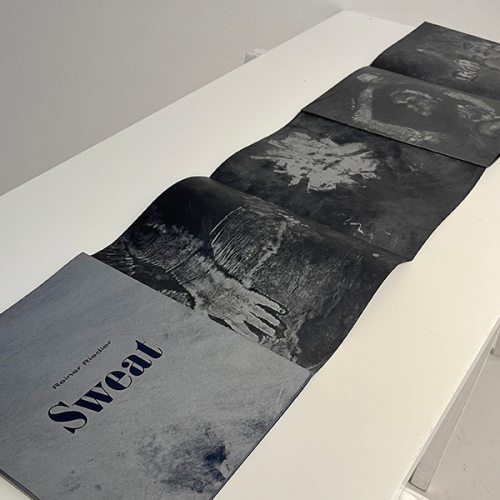
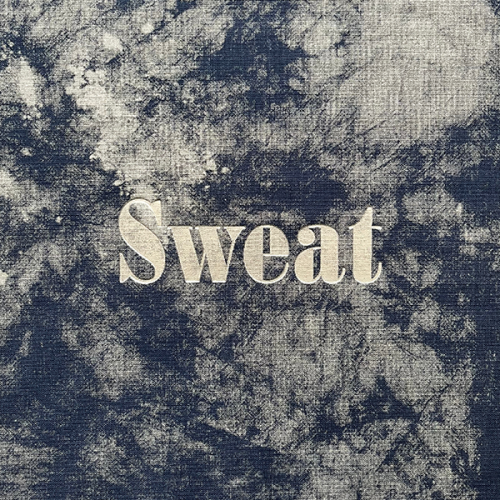 „In today’s world, sweating is taboo. Enter “sweat” into any search engine and you’ll find a multitude of ways to remedy it. The huge array of deodorants available commercially is an indication of just how unacceptable sweating is in everyday life. Sweat is embarrassing: a sign of poor hygiene. Body odor is ‘disgusting’. Faces cringe when confronted with it. Even as far back as the Bible, sweat was equated with hardship. When Adam was expelled by God, for example, he was condemned thenceforth to earn his daily bread By the Sweat of His Brow (Genesis 3, 19). Sweat may well owe a good part of its poor reputation to its anti-social stench, but it also has negative connotations due to its association with fear. A sweaty handshake betrays nervousness. When you wake up bathed in sweat at night, it’s more likely due to nightmares or anxiety than to faulty air conditioning. Photographer Reiner Riedler has discovered sweat as an artistic form of expression.Fascinated by the image captured by the sweat on his T-shirt after jogging – like a spontaneous self-portrait – he has used the sweat produced by others to create a series of images. In order to achieve this, he approached the renowned Fraunhofer Institute in Munich which provided him with a special sensory material that could be placed above or underneath his perspiring models. In doing so, Riedler used the sweaty body as a kind of rubber stamp to create life-size negatives. He then photographed these and transformed them into monochrome paper prints.“
- Vreni Hockenjos, Excerpt from the book
Photographs: Reiner Riedler Texts: Vreni Hockenjos Graphic design: Tapir Design / Ania Nalecka-Milach Publisher: Reflektor Year: 2019 Hardcover, linen, 104 pages Language: English Dimensions: 24 x 30,5 cm
ISBN: 978-3-9502450-9-7
-
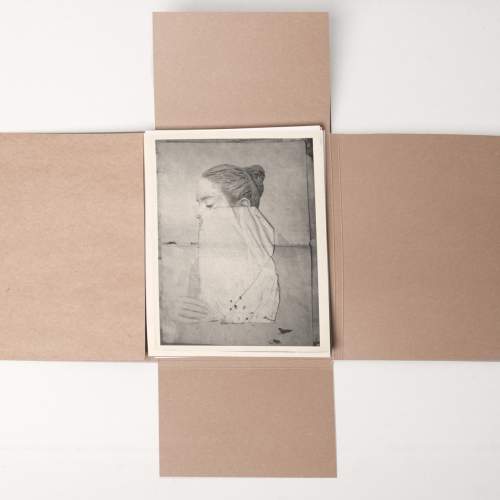
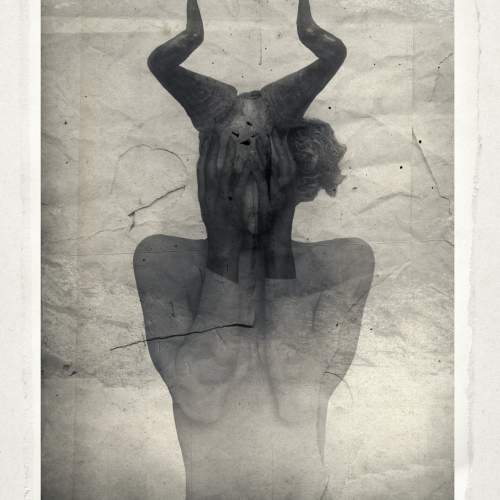 Robert Kusterle's exhibition catalogue is actually a photographic folder published on the occasion of the Images on Paper / Cartacei, exhibition opening at the Gong Gallery in Nova Gorica. The conceptual design of the publication is a collaboration between the artist, Gong Gallery and Studio Faganel from Gorizia, where the catalogue was also designed. The photographic folder includes, in addition to the expert text, fourteen individual reproductions of photographs based on images of old papers from the Gorizia archive, with damaged and faded stamps layered on top of each other. The last layer is made up of human figures that merge and are immersed in the paper, so that the viewer can no longer distinguish between the surface of the body and the paper. In the context of the artist's concept of photographs, the cover of the folder is partly made of pieces of old paper, while the title of the exhibition and the gallery's logo are stamped onto it. Author: Roberto Kusterle Text: Nataša Kovšca Publisher: Galerija Gong Year: 2020 Photographic map: 14 prints Print run: 100 copies Language: slovene, italian Dimensions: 27 x 21 cm ISBN: 978-961-95131-0-1
-
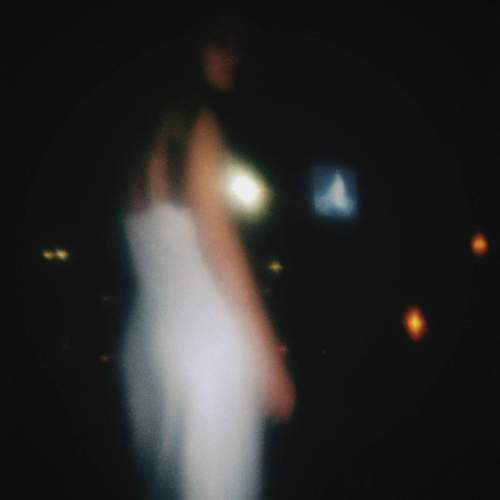 Nicole Brandstaetter (2001) is a Vienna-based artist whose work spans the fields of photography, storytelling, fashion and design. Since 2019, her photographic practice has been driven by a relentless pursuit of aesthetics, capturing the intricate interplay between visual appeal and narrative depth. Her public recognition began in 2020 with exhibitions at prestigious venues such as the Academy of Fine Arts. With a background in photography and audiovisual studies, her distinctive style and thematic exploration has been featured in various online magazines and recognized by designers in Vienna and the wider German-speaking community. The artist, who grew up in two different cultures - Austrian and American - is deeply intrigued by themes such as self-expression, transience and longing. These interests feed into her work, adding layers of meaning and resonance that invite the viewer to engage with the deeper narratives woven into her photographs. Her ability to integrate design and fashion into her photography has created a powerful visual language that captures the essence of contemporary artistic expression. In the photograph, rain pours down on the lens of my camera, creating this beautiful and abstract image of a silhouette in a white dress in the city of Milan. Amidst the dark streets, the glow of distant streetlights resembles a scattering of luminous dots. - Edition of 6 prints, sized 20x30 and printed on semi-Matt archival paper.
-
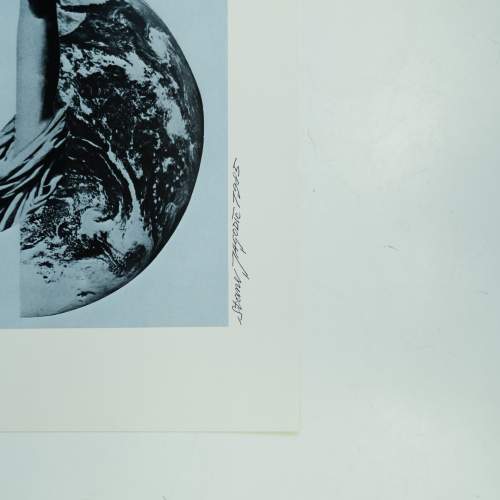
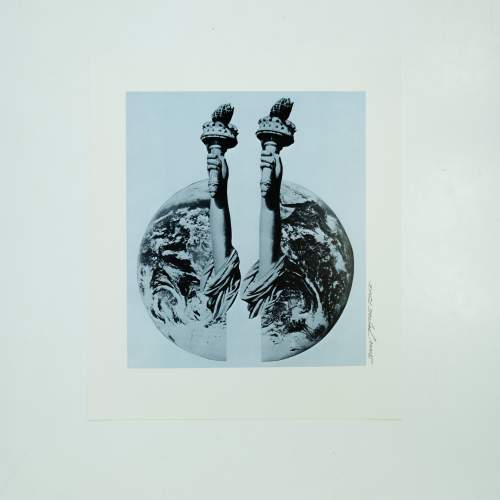 Stane Jagodič (1943) has been active in various fields, media and contexts of visual art since the mid-sixties. After graduating from the Academy of Fine Arts in Ljubljana in 1970, he soon became one of the most active and prominent artists in Yugoslavia, due to his distinguishable artistic expression. In his continuously developing body of work, he has adopted several different concepts of artistic production using various artistic media such as photography, painting, graphics, cartoons, performance, assemblages and object art (installations). Since 1967, Stane Jagodič has been exploring artistic photography and some of its creative derivates like photomontage and photo collage, which are the most significant in his artistic production. Stane Jagodič was a co-founder and conceptual leader of Grupa Junij, active between 1970 and 1985. The group worked as a broad artistic platform that included a number of prominent local and international artists. As an independent artist, Stane Jagodič participated in more than 50 solo and more than 200 group exhibitions worldwide. He lives and works in Ljubljana. To accompany the exhibition Why? at the Photon Gallery, which is on view from November 6, 2025 to January 23, 2026, we have prepared a short offer of limited edition prints from the Stane Jagodič collection.
-
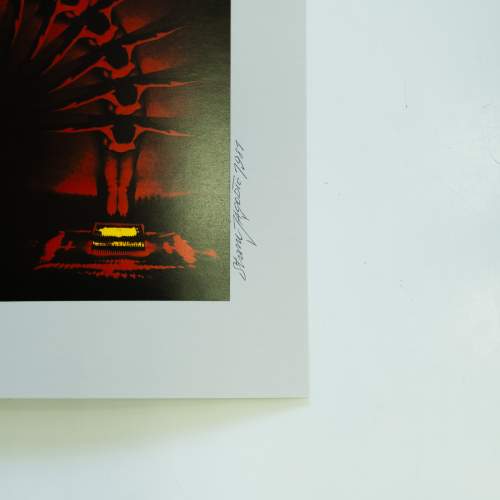
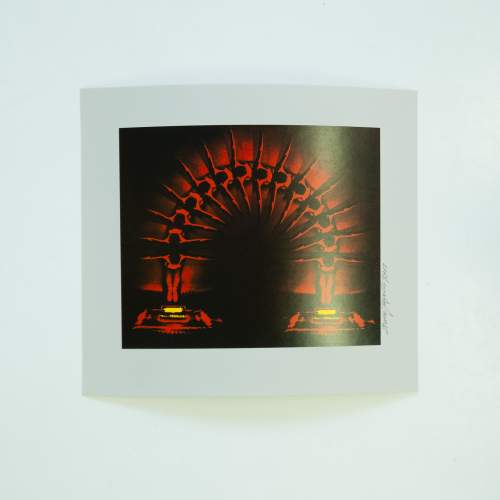 Stane Jagodič (1943) has been active in various fields, media and contexts of visual art since the mid-sixties. After graduating from the Academy of Fine Arts in Ljubljana in 1970, he soon became one of the most active and prominent artists in Yugoslavia, due to his distinguishable artistic expression. In his continuously developing body of work, he has adopted several different concepts of artistic production using various artistic media such as photography, painting, graphics, cartoons, performance, assemblages and object art (installations). Since 1967, Stane Jagodič has been exploring artistic photography and some of its creative derivates like photomontage and photo collage, which are the most significant in his artistic production. Stane Jagodič was a co-founder and conceptual leader of Grupa Junij, active between 1970 and 1985. The group worked as a broad artistic platform that included a number of prominent local and international artists. As an independent artist, Stane Jagodič participated in more than 50 solo and more than 200 group exhibitions worldwide. He lives and works in Ljubljana. To accompany the exhibition Why? at the Photon Gallery, which is on view from November 6, 2025 to January 23, 2026, we have prepared a short offer of limited edition prints from the Stane Jagodič collection.
-
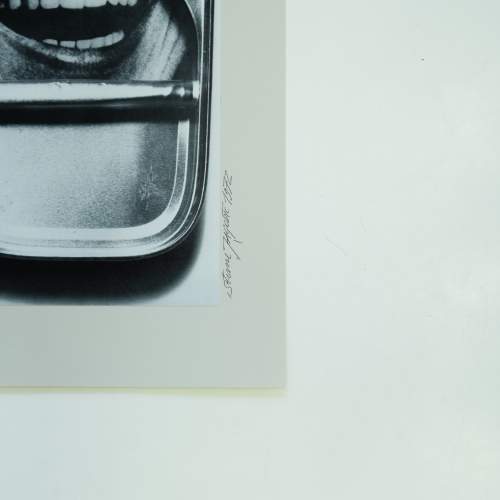
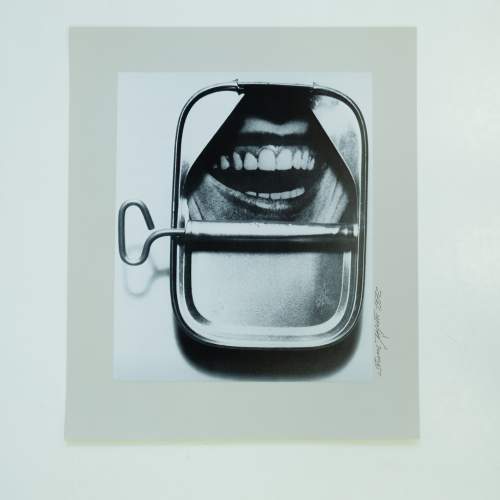 Stane Jagodič (1943) has been active in various fields, media and contexts of visual art since the mid-sixties. After graduating from the Academy of Fine Arts in Ljubljana in 1970, he soon became one of the most active and prominent artists in Yugoslavia, due to his distinguishable artistic expression. In his continuously developing body of work, he has adopted several different concepts of artistic production using various artistic media such as photography, painting, graphics, cartoons, performance, assemblages and object art (installations). Since 1967, Stane Jagodič has been exploring artistic photography and some of its creative derivates like photomontage and photo collage, which are the most significant in his artistic production. Stane Jagodič was a co-founder and conceptual leader of Grupa Junij, active between 1970 and 1985. The group worked as a broad artistic platform that included a number of prominent local and international artists. As an independent artist, Stane Jagodič participated in more than 50 solo and more than 200 group exhibitions worldwide. He lives and works in Ljubljana. To accompany the exhibition Why? at the Photon Gallery, which is on view from November 6, 2025 to January 23, 2026, we have prepared a short offer of limited edition prints from the Stane Jagodič collection.
