-
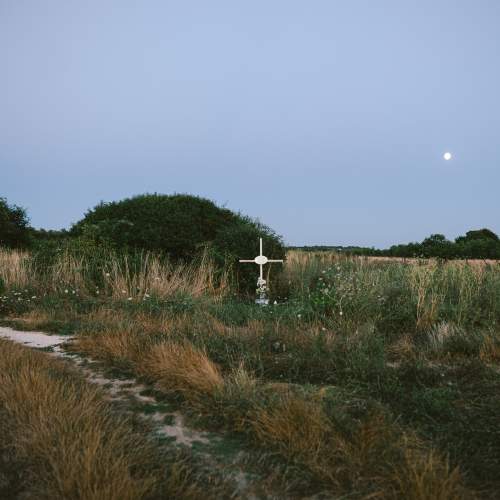 NEW!Luka Hernet (1998) is a younger-generation photographer from Maribor. Since 2018, he has worked across documentary, portrait, reportage, and concert photography. The series Somewhere, Somehow / Nekje, nekako brings together photographs taken in various locations during the most recent period of his artistic practice. Seemingly unrelated scenes, abandoned objects, traces of human presence, unusual interventions in the landscape, and subtle departures from the order of everyday life, come together in an open-ended visual narrative about transience, chance, and the fragility of the environment. Hernet is particularly interested in moments when the ordinary world briefly becomes unfamiliar, ambiguous, or almost surreal. The series SOMEWHERE, SOMEHOW / NEKJE, NEKAKO consists of photographs taken by Luka Hernet in various locations and at different stages of his career. Seemingly unrelated scenes—abandoned objects, traces of human presence, unusual interventions in the landscape, and subtle deviations from the everyday order—come together to form an open-ended visual narrative about transience, chance, and the fragility of the environment. Hernet is particularly interested in moments when the ordinary world briefly becomes alien, ambiguous, or almost surreal. The photographs are characterized by a blend of a documentary perspective and a distinct aesthetic sensibility. The artist shifts between color-saturated images, tranquil landscape scenes, and high-contrast black-and-white shots, yet maintains a consistent focus on the tension between gentleness and unease, order and chaos, presence and disappearance. Somewhere, Somehow is not so much a record of a specific space as it is a personal map of fleeting encounters with a world that is constantly changing and eludes definitive interpretation. The print run is 10 copies, the photograph measures 40 x 50 cm and is digitally printed on 230g matte paper.
 -
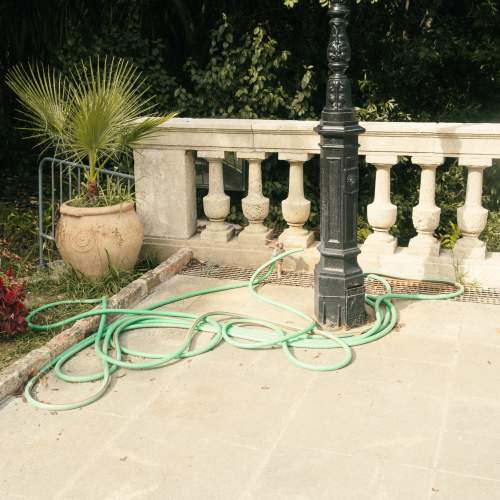 NEW!Luka Hernet (1998) is a younger-generation photographer from Maribor. Since 2018, he has worked across documentary, portrait, reportage, and concert photography. The series Somewhere, Somehow / Nekje, nekako brings together photographs taken in various locations during the most recent period of his artistic practice. Seemingly unrelated scenes, abandoned objects, traces of human presence, unusual interventions in the landscape, and subtle departures from the order of everyday life, come together in an open-ended visual narrative about transience, chance, and the fragility of the environment. Hernet is particularly interested in moments when the ordinary world briefly becomes unfamiliar, ambiguous, or almost surreal. The series SOMEWHERE, SOMEHOW / NEKJE, NEKAKO consists of photographs taken by Luka Hernet in various locations and at different stages of his career. Seemingly unrelated scenes—abandoned objects, traces of human presence, unusual interventions in the landscape, and subtle deviations from the everyday order—come together to form an open-ended visual narrative about transience, chance, and the fragility of the environment. Hernet is particularly interested in moments when the ordinary world briefly becomes alien, ambiguous, or almost surreal. The photographs are characterized by a blend of a documentary perspective and a distinct aesthetic sensibility. The artist shifts between color-saturated images, tranquil landscape scenes, and high-contrast black-and-white shots, yet maintains a consistent focus on the tension between gentleness and unease, order and chaos, presence and disappearance. Somewhere, Somehow is not so much a record of a specific space as it is a personal map of fleeting encounters with a world that is constantly changing and eludes definitive interpretation. The print run is 10 copies, the photograph measures 40 x 50 cm and is digitally printed on 230g matte paper.
 -
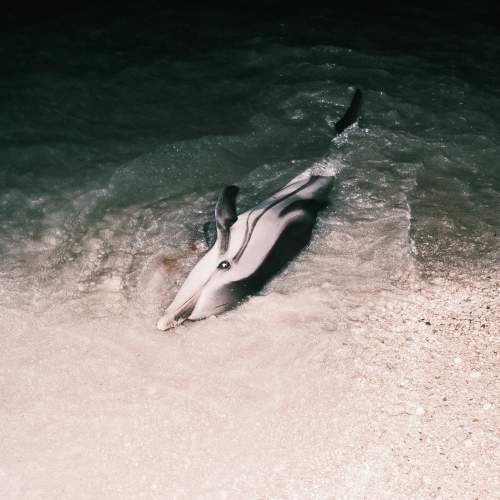 NEW!Luka Hernet (1998) is a younger-generation photographer from Maribor. Since 2018, he has worked across documentary, portrait, reportage, and concert photography. The series Somewhere, Somehow / Nekje, nekako brings together photographs taken in various locations during the most recent period of his artistic practice. Seemingly unrelated scenes, abandoned objects, traces of human presence, unusual interventions in the landscape, and subtle departures from the order of everyday life, come together in an open-ended visual narrative about transience, chance, and the fragility of the environment. Hernet is particularly interested in moments when the ordinary world briefly becomes unfamiliar, ambiguous, or almost surreal. The series SOMEWHERE, SOMEHOW / NEKJE, NEKAKO consists of photographs taken by Luka Hernet in various locations and at different stages of his career. Seemingly unrelated scenes—abandoned objects, traces of human presence, unusual interventions in the landscape, and subtle deviations from the everyday order—come together to form an open-ended visual narrative about transience, chance, and the fragility of the environment. Hernet is particularly interested in moments when the ordinary world briefly becomes alien, ambiguous, or almost surreal. The photographs are characterized by a blend of a documentary perspective and a distinct aesthetic sensibility. The artist shifts between color-saturated images, tranquil landscape scenes, and high-contrast black-and-white shots, yet maintains a consistent focus on the tension between gentleness and unease, order and chaos, presence and disappearance. Somewhere, Somehow is not so much a record of a specific space as it is a personal map of fleeting encounters with a world that is constantly changing and eludes definitive interpretation. The print run is 10 copies, the photograph measures 40 x 50 cm and is digitally printed on 230g matte paper.
 -
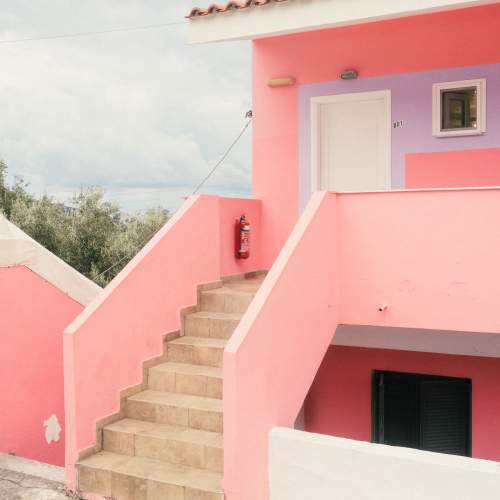 NEW!Luka Hernet (1998) is a younger-generation photographer from Maribor. Since 2018, he has worked across documentary, portrait, reportage, and concert photography. The series Somewhere, Somehow / Nekje, nekako brings together photographs taken in various locations during the most recent period of his artistic practice. Seemingly unrelated scenes, abandoned objects, traces of human presence, unusual interventions in the landscape, and subtle departures from the order of everyday life, come together in an open-ended visual narrative about transience, chance, and the fragility of the environment. Hernet is particularly interested in moments when the ordinary world briefly becomes unfamiliar, ambiguous, or almost surreal. The series SOMEWHERE, SOMEHOW / NEKJE, NEKAKO consists of photographs taken by Luka Hernet in various locations and at different stages of his career. Seemingly unrelated scenes—abandoned objects, traces of human presence, unusual interventions in the landscape, and subtle deviations from the everyday order—come together to form an open-ended visual narrative about transience, chance, and the fragility of the environment. Hernet is particularly interested in moments when the ordinary world briefly becomes alien, ambiguous, or almost surreal. The photographs are characterized by a blend of a documentary perspective and a distinct aesthetic sensibility. The artist shifts between color-saturated images, tranquil landscape scenes, and high-contrast black-and-white shots, yet maintains a consistent focus on the tension between gentleness and unease, order and chaos, presence and disappearance. Somewhere, Somehow is not so much a record of a specific space as it is a personal map of fleeting encounters with a world that is constantly changing and eludes definitive interpretation. The print run is 10 copies, the photograph measures 40 x 50 cm and is digitally printed on 230g matte paper.
 -

 Branko Lenart has been distributing art photo postcards by regular mail since 1976, that is, for fifty years. He sent the first one from Arles, France, and so far, there have been well over a hundred of them. It is a black-and-white analog photograph, usually 10 × 15 cm in size, which is equipped on the back like a postcard, i.e. with a line for the recipient’s address and a space for a message. The recipient’s postal address is always written by hand, and a piece of paper with typed text is glued to the message area. This small but thoughtfully designed piece of mail is not only a personal greeting from the journey, but also part of a long-term artistic project in which the photograph, word, postmark and selected stamp together form a comprehensive message. Lenart often uses quotes from writers, musicians or other creators, which he connects with the visual motif of the photograph, thus creating a multi-layered play of meanings. His postcards are therefore at the same time a document of his travels, an intimate contact with his addressees, and a subtle form of mail art that has accompanied his photographic work for five decades. The exhibition - Branko Lenart : LEN / MailART at the Photon Gallery featured the original postcards as well as some enlargements of the text pages. The exhibition also featured the newest monograph of the same title with a text by dr. Marjeta Ciglenečki. Branko Lenart (1948, Slovenia) was born in former Yugoslavia and later migrated to neighbouring Austria with his family at 6 years of age. He studied pedagogy in Graz. In 1968 he became a member of the avant-garde art society Forum Stadtpark, that later grew into Camera Austria. He thought photography at the College of Art and Design (1979 – 2007) and the Technical College Joanneum (1996 – 2003) in Graz. Lenart is an internationally renowned photographer, who has widely travelled across the world ever since his youth. He attended various artist residencies like Apeiron Workshops in Millerton, New York, La Rochelle in Arles, France, and others in Oxford, Rome, Paris and London. His oeuvre sits between documentary and conceptual art photography. He dedicated his attention to the margins of society, be it the members of urban counter-cultures at the time or to the social conditions in the country and the peripheries. This genre of photography became to be known as “subjective topography”. Text: Marjeta Ciglenečki Proofreading: Darja Grobovšek Homšak Translation: Sebastian Walcher Design: Anika Kronberger, Erwin Wagner Printed by: Demago, Maribor
 -
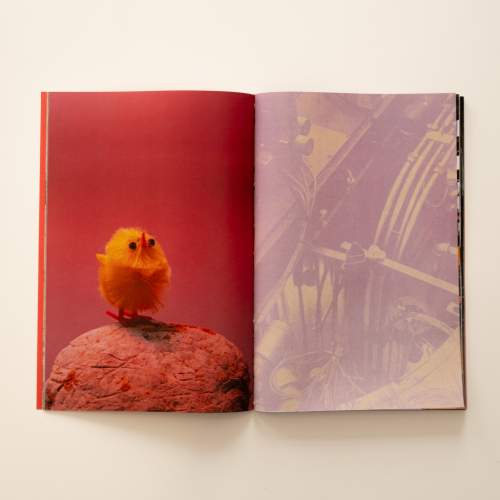
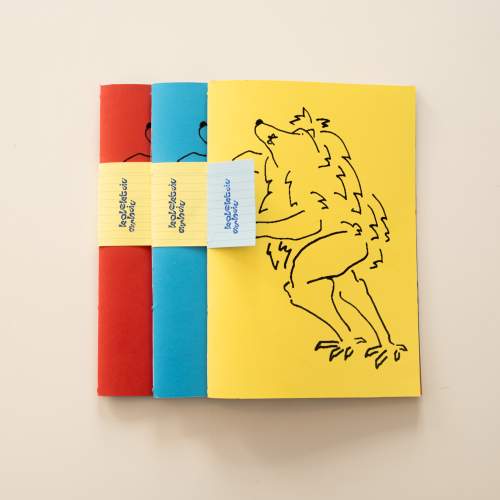 Arhiv Kolektiv (2023–) is a multidisciplinary group consisting of (fairly) young artists, designers and a philosopher-sociologist. It consists of Tim Topić, Jernej Strmšek, Rene Ketiš, Lan Rahne, Eva Anzeljc and Ana Rogač. They were founded organically through the production process of their debut ‘Sterilni študent’ (2024, mentored by Assoc. Prof. Peter Koštrun, UL ALUO, and Prof. Dr. Mladen Dolar, UL FF), which was published by UL ALUO in 2024. The release was accompanied by an exhibition and a series of events at the Kamera Kina Šiška Gallery, and later the concept was also adapted for the group study exhibition ‘Curative Connections’ at the City Gallery Nova Gorica (2025, curated by Maša Žekš). The project was well received by both the general and professional public. The published catalogue is part of the previous process exhibition Nine to Five, representing an intermediate step in the broader project Kolektiv Arhiv, which explores the visual and spatial manifestations of industrial and energy infrastructure in Slovenia. Eleven to seven: catalogue of the process exhibition Nine to Five Editors: Eva Anzeljc, Rene Ketiš, Lan Rahne, Ana Rogač, Jernej Strmšek, Tim Topić Texts: Lan Rahne, Ana Rogač, Tim Topić Photos: Eva Anzeljc, Rene Ketiš, Lan Rahne, Ana Rogač, Jernej Strmšek, Tim Topić Drawings: Eva Anzeljc, Jernej Strmšek Design: Kolektiv Arhiv Technique: zine Proofreading: Lan Rahne Published by: Academy of Fine Arts and Design, Ljubljana, April 2026 Printed by: UL ALUO Pressing: 3 copies
 -
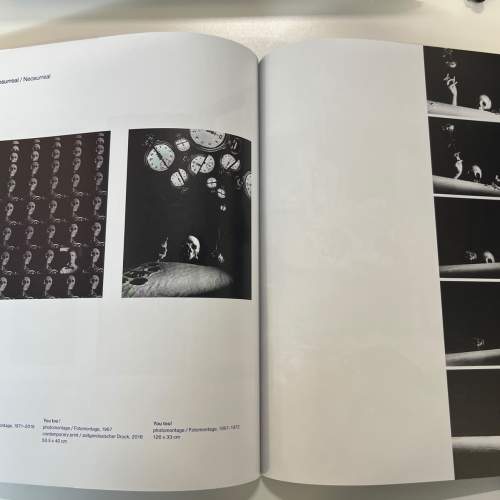
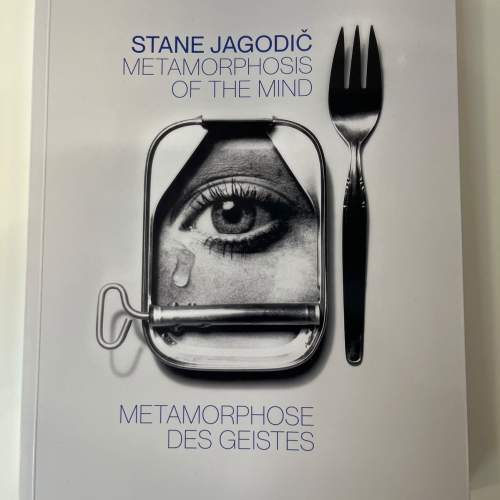 As an artist, Stane Jagodič (1943, Slovenia) has been active in various fields, media and contexts of visual art since the mid-1960s. After graduating from the Academy of Fine Arts in Ljubljana in 1970, he soon became one of the most active and prominent artists in Yugoslavia, due to his distinguishable artistic expression. In his continuously developing body of work, he has adopted several different concepts of artistic production using various artistic media such as photography, painting, graphics, cartoons, performance, assemblages and object art (installations). Ever since 1967 Stane Jagodič has been exploring artistic photography and some of its creative derivates like photomontage and photo collage, which are the most significant in his artistic production. Stane Jagodič was a co-founder and conceptual leader of Grupa Junij, active between 1970 and 1985. It worked as a broad artistic platform that included a number of prominent local and international artists. As an independent artist, Stane Jagodič participated in more than 50 solo and more than 200 group exhibitions worldwide. He lives and works in Ljubljana. The catalogue Metamorphosis of the Mind was published on the occasion of a major retrospective exhibition by Stane Jagodič at the Künstlerhaus in Vienna. More information about the exhibition can be found here. Publisher: Museum and Galleries of the City of Ljubljana / Mestna galerija Ljubljana Editors: Barbara Sterle Vurnik, Dr. Sarival Sosič Texts: Barbara Sterle Vurnik, Dr. Lev Menaše, Dejan Sluga Design and layout: Kabinet 01 Printing: Collegium Graphicum d. o. o., Ljubljana DA tisk, Ljubljana Printing: 230
 -
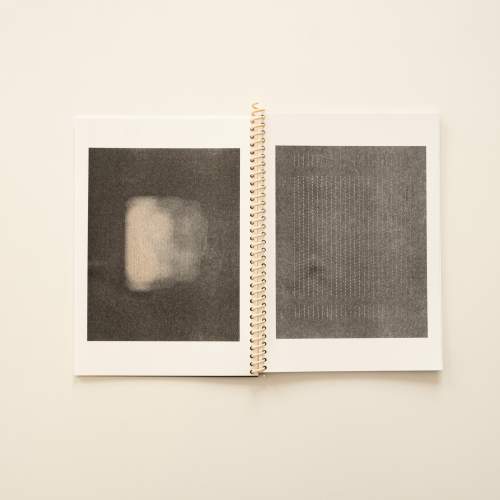
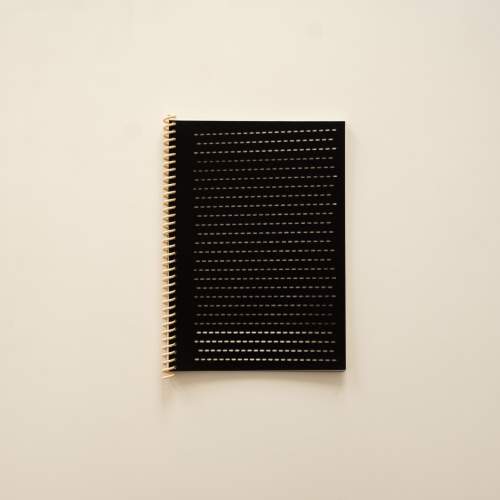 Tim Topić (2002) works primarily in the fields of photography, graphics, spatial installations, sound and graphic design, which he is currently studying at the Academy of Fine Arts and Design, University of Ljubljana. He is currently interested in memory, its conception, spatial perceptions and manipulation of all of the above. He regularly collaborates with the DobraVaga Gallery, and has also exhibited in groups at the Photon Gallery, SEM, PMS, Kino Šiška, MOL City Hall and at the exhibition of the Photography Department Ponjava 4. He has had solo exhibitions at DobraVaga, Kino Šiška, MOL City Hall and the Small Gallery of the Bank of Slovenia. As part of the Kolektiv Arhiv, he co-published the art publication Sterile Student in 2024. He is the winner of the 9th ZineVitrine call.Tehnique: zineDimensions: 14 x 21 cmYear: 2025
 -
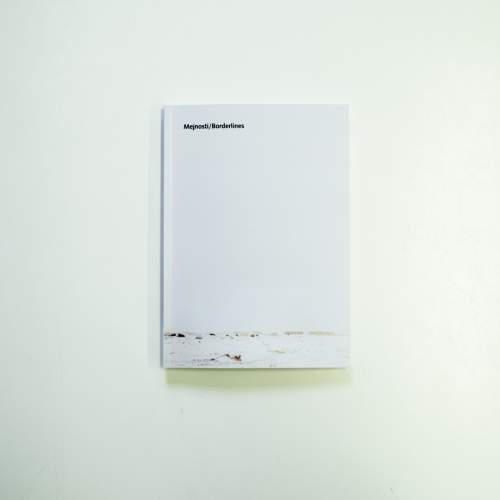
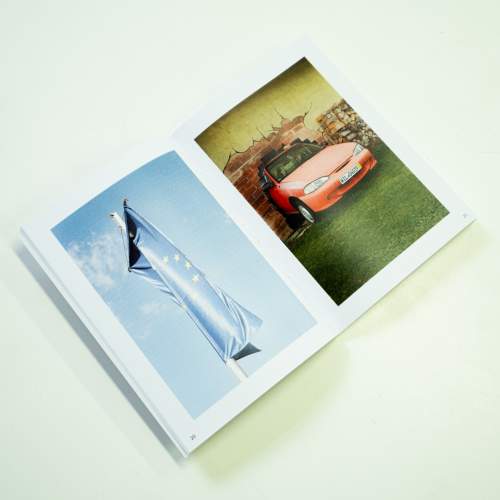 NEW!Catalogue of the international curated exhibition Borderlines. The exhibition raises the question of borders – both physical and symbolic – in a specific local, as well as in a broader European context, where political conflicts, wars, migrations and other social transformations have once again brought the concept of borders to the forefront. The border appears as a physical dividing line, but also as a social, psychological and cultural construct that determines the relationships between “us” and “them”, normal and different, safe and threatening. The project presents artists from Slovenia, Italy and Austria, whose works, through contemporary photography, thematize different understandings of borderland in various ways. The exhibition combines documentary, conceptual and performative approaches and brings diverse insights into contemporary European photography. Its added value lies in the fact that it does not only thematize borders in a geographical sense, but also places them in broader contexts of social, psychological and identity relations. In this way, the Borderlines / Borderlands project creates a space for dialogue about our common future at a time when Europe is facing ever-new forms of division. Curator(s): Dejan Sluga, Nataša Kovšca Author(s): Dejan Sluga, Nataša Kovšca Publisher: GONG Gallery – Institute for the Promotion of Contemporary Art, Photon Gallery Translation: Arven Šakti Kralj Proofreading: Anja Mugerli (SLO), Ksenija Vidic (ENG) Design: Blaž Erzetič Printing: 250 Year of publication: 2025 Number of pages: 62
 -
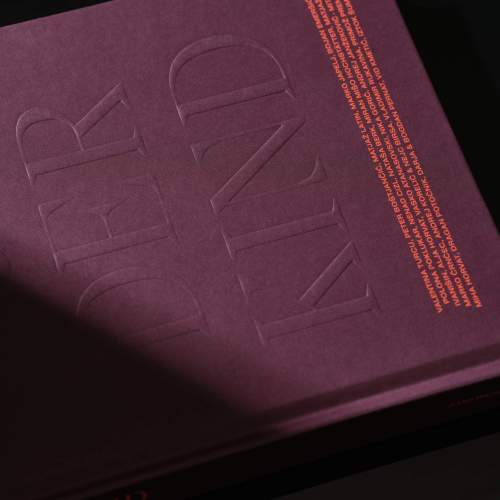
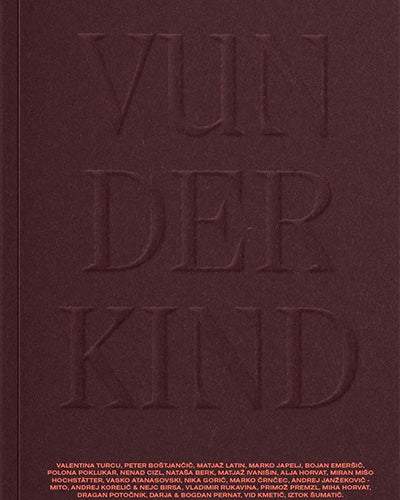 NEW!The book is a tribute to portrait photography, enriched with interviews with individuals who create excellence and strengthen the positive energy of the city. The subjects reveal fragments of their personal experiences, creative processes, and lives in general. Each of them has made a profound mark on their field, be it theater, music, visual arts, or urban culture. What they all have in common is that they raise the cultural capital of the city. Because of them, Maribor is truly a Vunderkind - Katja Gönc Publisher: Visual communications, Sami Abder Rahim Author(s) of the text(s): Marko Radmilovič, Jaša Lorenčič, Uroš Dokl, Katja Gönc Year of publication: 2022 Dimensions and number of pages: 215 × 285 × 30 / 312 pages Hardcover
 -
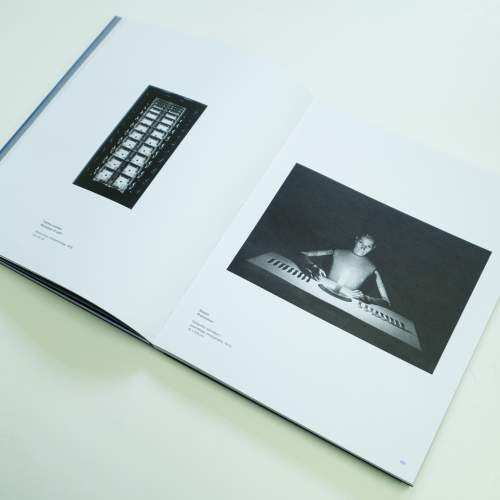
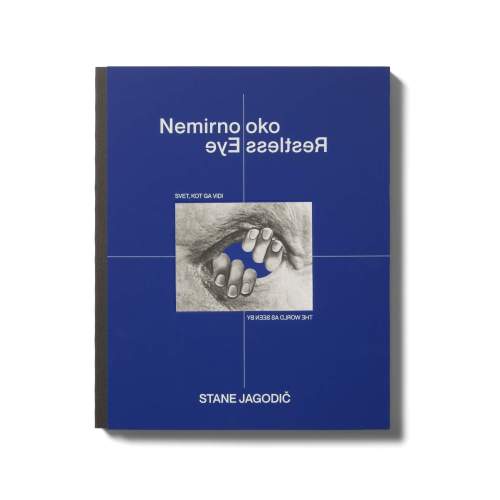 NEW!A representative bilingual catalogue of the exhibition Stane Jagodič: Restless Eye brings together key texts, a rich selection of works, and the distinctive design of Kabinet 01 studio. The catalogue accompanying the survey exhibition Restless Eye at the City Art Gallery Ljubljana offers a comprehensive insight into more than six decades of creation by one of the most intriguing Slovenian artists. The publication features essential texts by curators Barbara Sterle Vurnik and Dejan Sluga, and by art historian Dr. Lev Menaše, illuminating Jagodič’s rich interdisciplinary practice – from drawing, photomontage and X-ray art to performance and complex assemblages. In addition to documenting the exhibition layout, the catalogue includes an extensive selection of reproductions of key works from the 1960s, 70s and 80s, revealing artistic breakthroughs, influences of historical avant-gardes and the artist’s distinctly socially critical stance. A particular value of the catalogue lies in the meticulously crafted design by Studio Kabinet 01, led by Jan Jagodič, whose thoughtful visual rhythm and contemporary graphic language complement the conceptual character of the exhibition. This representative bilingual catalogue is intended for both experts and lovers of contemporary art – an essential companion to one of the most important presentations of Jagodič’s oeuvre to date. Published by: Museum and Galleries of Ljubljana / City Art Gallery Ljubljana Editors: Barbara Sterle Vurnik, dr. Sarival Sosič Texts: Barbara Sterle Vurnik, dr. Lev Menaše, Dejan Sluga English translation and proofreading: Arven Šakti Kralj Slovenian proofreading: Mirjam Furlan Lapanja Design and layout: Hana Jesih, Kabinet 01 Printed by: Collegium Graphicum d. o. o., Ljubljana Print run: 230 December, 2025
 -
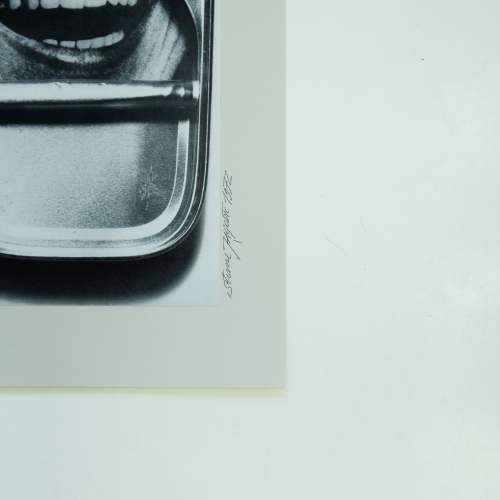
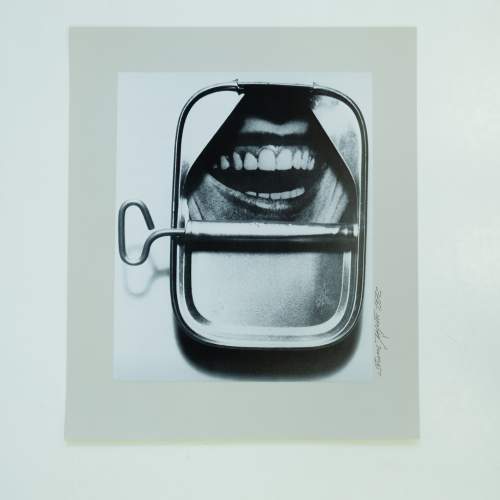 Stane Jagodič (1943) has been active in various fields, media and contexts of visual art since the mid-sixties. After graduating from the Academy of Fine Arts in Ljubljana in 1970, he soon became one of the most active and prominent artists in Yugoslavia, due to his distinguishable artistic expression. In his continuously developing body of work, he has adopted several different concepts of artistic production using various artistic media such as photography, painting, graphics, cartoons, performance, assemblages and object art (installations). Since 1967, Stane Jagodič has been exploring artistic photography and some of its creative derivates like photomontage and photo collage, which are the most significant in his artistic production. Stane Jagodič was a co-founder and conceptual leader of Grupa Junij, active between 1970 and 1985. The group worked as a broad artistic platform that included a number of prominent local and international artists. As an independent artist, Stane Jagodič participated in more than 50 solo and more than 200 group exhibitions worldwide. He lives and works in Ljubljana. To accompany the exhibition Why? at the Photon Gallery, which is on view from November 6, 2025 to January 23, 2026, we have prepared a short offer of limited edition prints from the Stane Jagodič collection.
