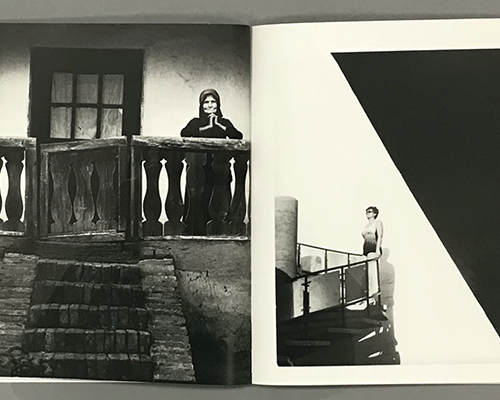
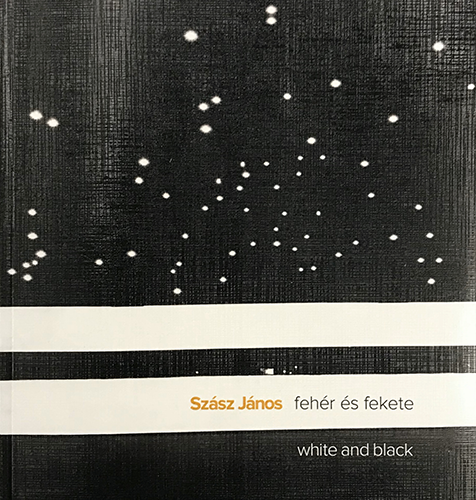
• Little known outside of his native Hungary, the body of work Szász created from the late 1950s through the 1970s, epitomizes the artistic vision and innovation of photographers active in Hungary during the years of communism. Featuring boldly graphic abstractions primarily drawn from Hungarian life and landscape, Szász’s images communicate through a universal vernacular. Working in the tradition of Hungarian greats such as André Kertész and László Moholy-Nagy, János Szász’s images are notable for their experimentation with radical perspectives, formalist compositions, and stark, black and white contrast printing. Szász’s photographs transform ordinary scenes from his hometown of Pécs — snow-covered vineyards, stacked firewood, and rows of seating in a darkened movie theater—into bold and graphic compositions. By manipulating darkroom exposure and processing techniques, Szász often reduced his subjects to pattern. He utilized a darkroom process for high-contrast printing, which involved chemical over-processing, then painstakingly bleaching over toned areas with a paintbrush or sponge, to arrive at his dynamically graphic images.

    Photographs: Szász János Texts:  Kincses Károly Graphic design:  Bodó Márton Translation:  Szász Balázs Publisher: Szolga Hajnal Year: 2012 Paperback, 128 pages Language: English, Hungarian Dimensions: 27 x 21 cm ISBN: 978-963-08-2959-5
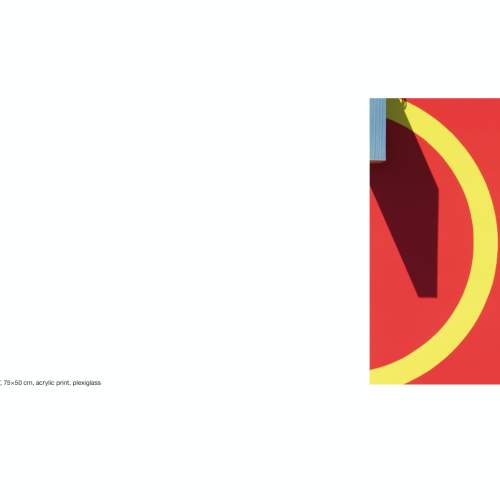
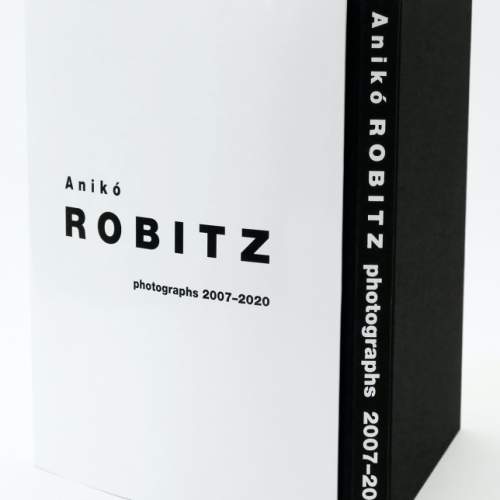
  • In this book Anikó Robitz presents her photographs made between 2007 and 2020. Her works are based on modern and contemporary architecture. When taking pictures she uses only geometrical forms and elements to create her unique and minimalistic photos. While using the chosen details the composition can get far from the original and shows us something completely new. None of the photos were made in the studio but in the real world which surrounds us, in cities where titles refer to. Although Anikó Robitz is a photographer, her pictures are more appropriately approached as works of fine art. They are best understood by those who are familiar with 20th century visual art forms, primarily abstraction, Suprematism, and Minimalism – can be read in four languages in the foreword of the book. Text written by artist and art critic Bálint Szombathy.
    Text: Bálint Szombathy Design: Aniko Robitz Publisher: Self-published and coproduced by Photon – Centre for Photography Year: 2021 Hardback, canvas bound with dust jacket, 176 pages Edition: 200 copies Dimensions: 22,5 x 26,5 mm Language: Hungarian, English, German, French ISBN: 978-615-01-0633-5
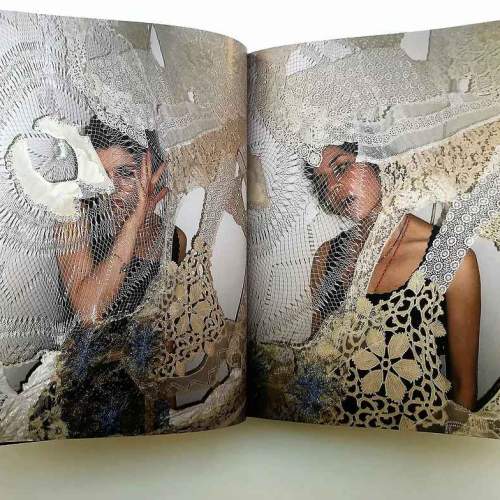
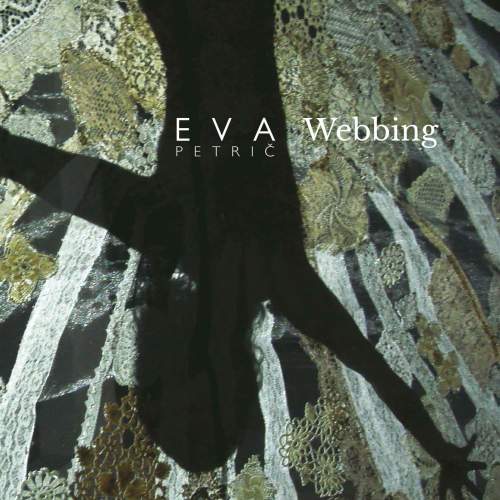
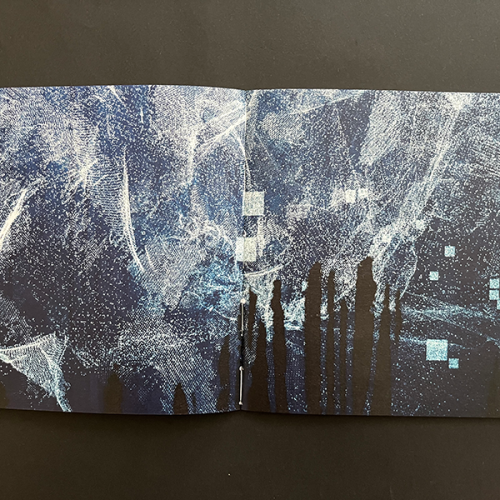
  • Eva Petrič’s Webbing is a »hybrid« of her visual art and creative writing with which she presents the web of her 25 art installations in the medium of lace assembage. Made in the period of 2012-2018, they were installed worldwide. Connected into one web by the artist’s perception of lace representing hematomas they seem to exist as a collective web which surpasses time and space. Hematomas occur not only when the wall of blood  vessels is damaged and blood leaks into surrounding tisues where it does not belong, but also on emotional and social dimensions. We, as a society or as indiviudals, can ourselves be hematomas when emotional barriers break and emotions explode… Petrič’s hematomas, are further tied into one common web by their ephemerality: when the artist deinstalls them, they cease to exist and can never again appear in the same form – except in this monography. Author: Eva Petrič Publisher: Drava, Klagenfurt Year: 2018 Hard cover, 288 pages 500 copies Language: Angleški Dimensions: 31 x 23 cm ISBN: 9783854358947    
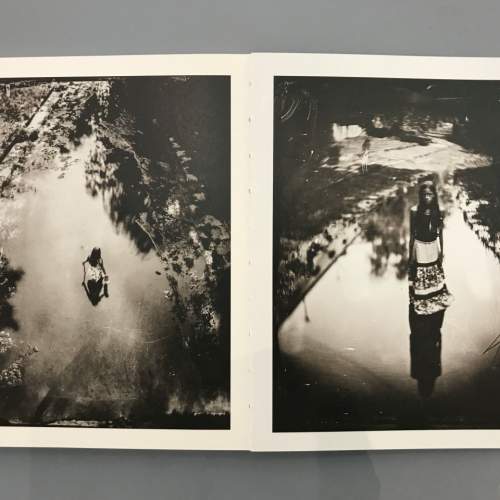
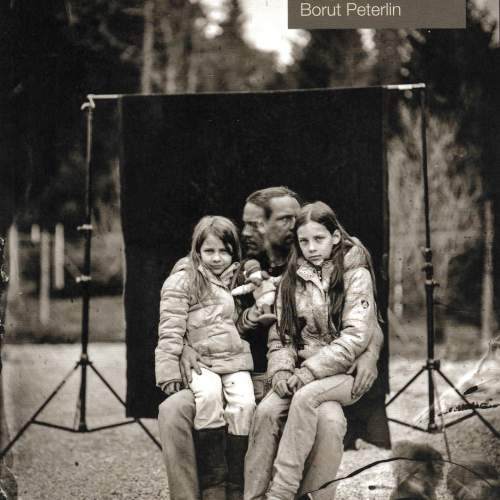
  • “When I was ten years old, I was playing with fire and I accidentally spilled gasoline on myself. My burns were severe, and I barely survived. It was extremely difficult, but when I became a father, I came to see that it must have been much harder on my parents than on myself. The fear of losing a child is so much greater then the fear of personal perish. However, losing a child is not just a physical thing. Separating from my wife after 21 years together reawakened the fear, and an avalanche of emotions buried me. These images are talking about loss and distance. These images are talking about bonds. These images are talking about photography as a bridge. These images are creating the past. These images speak of the fears and delights of being a father.” Author about photography series presented in this book. Author: Borut Peterlin Publisher: Self-published and coproduced by Photon – Centre for Contemporary Photography Year: 2017 Paperback, 120 pages, 500 copies Language: english, slovene Dimensions: 21 x 16,5 cm ISBN: 978-961-288-194-8
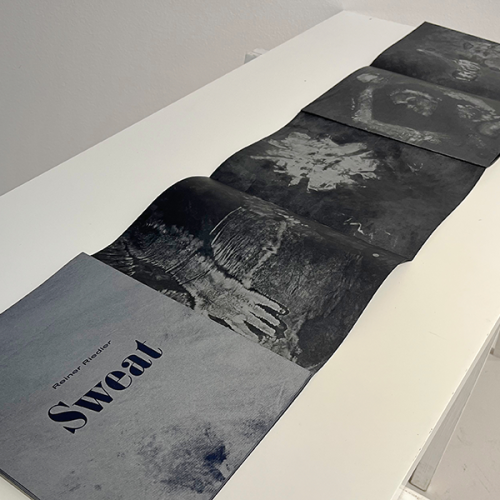
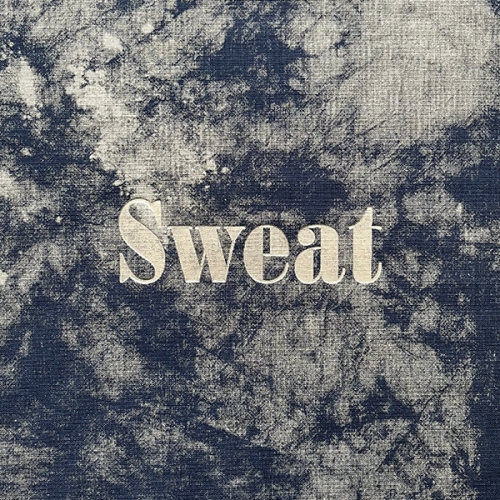
  • „In today’s world, sweating is taboo. Enter “sweat” into any search engine and you’ll find a multitude of ways to remedy it. The huge array of deodorants available commercially is an indication of just how unacceptable sweating is in everyday life. Sweat is embarrassing: a sign of poor hygiene. Body odor is ‘disgusting’. Faces cringe when confronted with it. Even as far back as the Bible, sweat was equated with hardship. When Adam was expelled by God, for example, he was condemned thenceforth to earn his daily bread By the Sweat of His Brow (Genesis 3, 19). Sweat may well owe a good part of its poor reputation to its anti-social stench, but it also has negative connotations due to its association with fear. A sweaty handshake betrays nervousness. When you wake up bathed in sweat at night, it’s more likely due to nightmares or anxiety than to faulty air conditioning. Photographer Reiner Riedler has discovered sweat as an artistic form of expression.Fascinated by the image captured by the sweat on his T-shirt after jogging – like a spontaneous self-portrait – he has used the sweat produced by others to create a series of images. In order to achieve this, he approached the renowned Fraunhofer Institute in Munich which provided him with a special sensory material that could be placed above or underneath his perspiring models. In doing so, Riedler used the sweaty body as a kind of rubber stamp to create life-size negatives. He then photographed these and transformed them into monochrome paper prints.“

    - Vreni Hockenjos, Excerpt from the book


    Photographs: Reiner Riedler Texts: Vreni Hockenjos Graphic design: Tapir Design / Ania Nalecka-Milach Publisher: Reflektor Year: 2019 Hardcover, linen, 104 pages Language: English Dimensions: 24 x 30,5 cm

    ISBN: 978-3-9502450-9-7

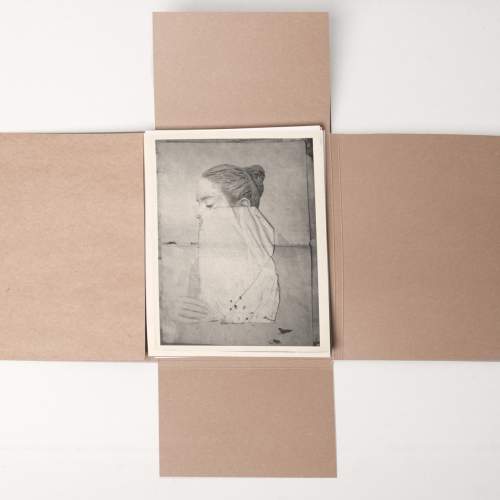
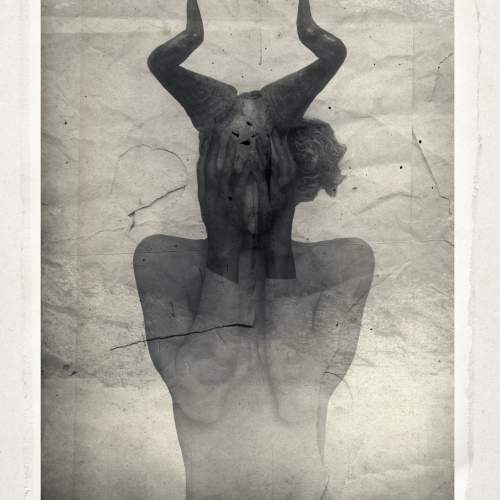
  • Robert Kusterle's exhibition catalogue is actually a photographic folder published on the occasion of the Images on Paper / Cartacei, exhibition opening at the Gong Gallery in Nova Gorica. The conceptual design of the publication is a collaboration between the artist, Gong Gallery and Studio Faganel from Gorizia, where the catalogue was also designed. The photographic folder includes, in addition to the expert text, fourteen individual reproductions of photographs based on images of old papers from the Gorizia archive, with damaged and faded stamps layered on top of each other. The last layer is made up of human figures that merge and are immersed in the paper, so that the viewer can no longer distinguish between the surface of the body and the paper. In the context of the artist's concept of photographs, the cover of the folder is partly made of pieces of old paper, while the title of the exhibition and the gallery's logo are stamped onto it. Author: Roberto Kusterle Text: Nataša Kovšca Publisher: Galerija Gong Year: 2020 Photographic map: 14 prints Print run: 100 copies Language: slovene, italian Dimensions: 27 x 21 cm ISBN: 978-961-95131-0-1
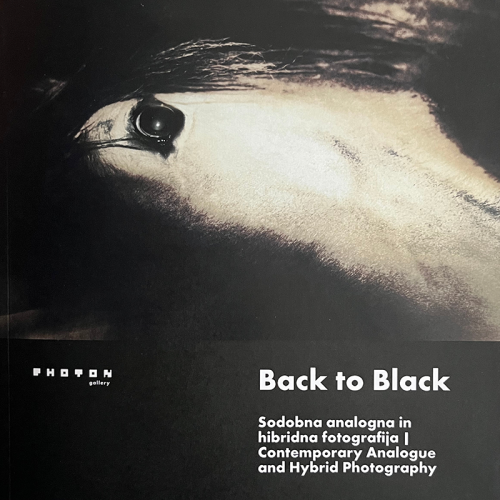
  • The Back to Black project is set up as an international project in which Photon joins the global trend of reviving interest in black-and-white, analog and the so-called hybrid photography, and especially in contemporary, creative use of old photographic techniques. In modern times, these are often associated with the use of contemporary technologies, which expand the creative field of application and bring original solutions even in today’s mostly digital time. This research is in terms of content focused on representing different approaches of contemporary artists to the medium which was not long ago predicted to go extinct. There has been an incredible turnaround in recent years as the popularity of analog and black-and-white photography has begun to revive. Analog photography, that was thought as obsolete, is experiencing a renaissance, especially among young people. Wide and renewed interest in analog photography can be seen especially on social media, where large communities with millions of followers have sprung up in the last few years. Also in the field of artistic photography, where the practice of hybrid photography has already prevailed in the last two decades, this trend is well adopted, especially among young photographic artists. Today, they use all the technologies and tools available, and the works are a combination of the latest technologies and the oldest photographic techniques. A part of this rich practice, which is so hearty enriched and re-thought with photographic history, can also be seen in this exhibition and catalog. Editor: Špela Pipan Author of the texts: Dejan Sluga Participating artists: Balázs Deim, Alessandra D’intino, Jošt Dolinšek, Lena Feitl, Elí Joteva, Reiner Riedler, Peter Koštrun, Roberto Kusterle, Borut Peterlin, Eva Petrič, Herman Pivk Design: Jure Legac Translators: Melita Silič, Deja Bečaj Publisher: Photon – Center za sodobno fotografijo Year: 2022 Softcover, 47 pages Edition: 200 copies Language: English, Slovene Dimensions: 18 x 18 cm
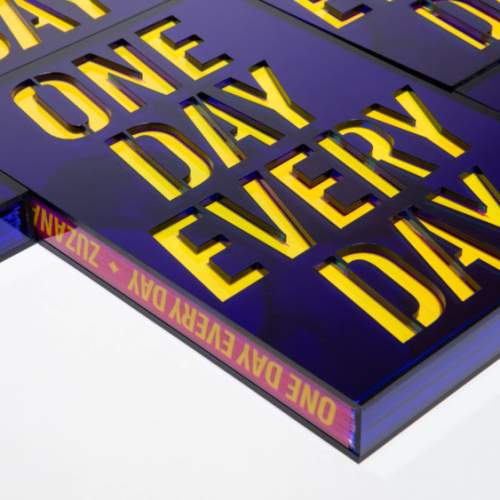
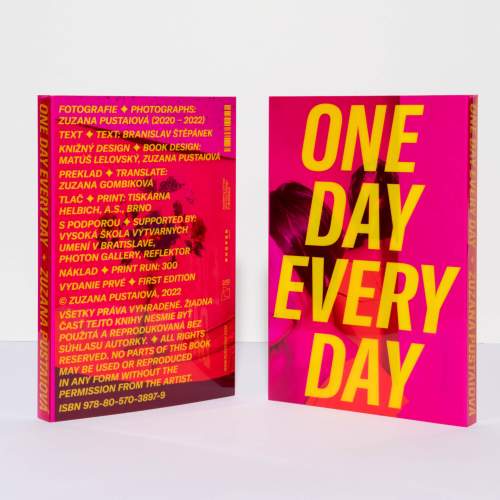
  • The debut by Zuzana Pustaiová titled One Day Every Day (2022) is an ironic commentary on various social norms impacting our daily lives. Commonplace routine, gender stereotypes, and role-playing (depicted in the book literally as ‚wearing masks‘) are few examples of cultural code, which, on the one hand, bind the society together, but on the other, it imposes the often unwanted social pressure affecting an individual’s freedom. In this book, the artist seeks the boundary where the (otherwise useful) behavioral patterns become pathological. Exploring the intricate relationship between these patterns and broader social phenomena, the book shows deeper layers of institutional limitations conceived by the policy-makers and relayed to the public by the media and via social networks. It brings the reader’s attention to the point that while striving for a better world, one ought not to forget how the individual feels in the realm of all those recommendations, behests and restrictions, imprinted to one’s mind since an early age and while being brought up, only to find that civilizing imperatives often lead to systematic oppression. The idea of rethinking one’s conviction, when it comes to social norms, is further supported by the ‚Leporello‘ layout, allowing for alternative page juxtapositions. Photographs: Zuzana Pustaiová (2020-2022) Text: Branislav Štěpánek Book design: Matúš Lelovský, Zuzana Pustaiová Print run: 300 + collectors edition of 11 Date of publishing: May 2022 Language: Slovak / English Number of pages: 62 Number of images: 60 Publisher: self-published with Reflektor Supported by: Academy of Fine Arts and Design in Bratislava www.vsvu.sk Photon Gallery www.photon.si Reflektor www.reflektor.org Fond výtvarných umení www.fvu.sk Zoltán Szabó www.raftys.sk Supporters of crowdfunding campaign on www.startlab.sk
  • Uroš Acman (1982) graduated in photography at FAMU, Prague in 2003. He later continued his studies on a post-graduate level at École cantonale d’art de Lausanne (Écal) in Switzerland, where he graduated in 2008. He currently teaches photography at the Secondary School for Design and Photography (SŠOF) in Ljubljana. His works have been shown in several group exhibitions in Slovenia, Italy, Austria, Slovakia and the Czech Republic. His solo exhibitions include the series Museums in the Simulaker Gallery (2008) and the Škuc Gallery in Ljubljana (2009) which documents the so-called hunting rooms and spaces. More recently, his series Night was shown in the group exhibition Without Borders? Boundless Invisible Walls, which travelled from Fotogalerie Rathaus Graz to Galerie Photon in Ljubljana and Bad Radkersburg on the Austrian-Slovenian border. This work is part of a photographic folder or portfolio box with twenty prints by renowned Slovenian photographic artists from the 1970s to the present day, published on the occasion of the 20th anniversary of Photon Gallery. - The edition is 100 copies, the 40 x 50 cm photographs are printed on archival paper, the prints are signed and accompanied by certificates.
  • Tomo Brejc (1975) studied at the Faculty of Arts in Ljubljana, where he graduated with his thesis The End of Photography – or Just a Chance to Rethink European Visual Culture. In recent years, he has been active in the fields of artistic production, fashion photography and theoretical writing. Between 1999 and 2003, he was a member of the editorial board of the magazine Fotografija, where he also published several professional articles on the theory of photography and in the field of photographic production. He collaborates with many national and international publications and agencies. He is one of Slovenia’s most internationally successful photographers. Brejc has developed his own distinctive style over the years, encompassing his extensive knowledge of both the photographic medium and art history. A graduate in philosophy and cultural sociology, Tomo Brejc often uses principles from philosophy and cultural theory in his work. His photographs are therefore conceptually profound and well thought out, while at the same time intuitively created and supported by a high level of technical execution. His last solo exhibition in Slovenia was Unfinished Landscapes at Photon Gallery (2022). This work is part of a photographic folder or portfolio box with twenty prints by renowned Slovenian photographic artists from the 1970s to the present day, published on the occasion of the 20th anniversary of Photon Gallery. - The edition is 100 copies, the 40 x 50 cm photographs are printed on archival paper, the prints are signed and accompanied by certificates.
Go to Top