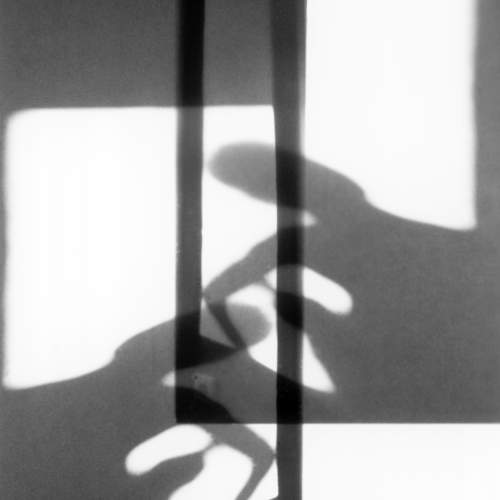
-
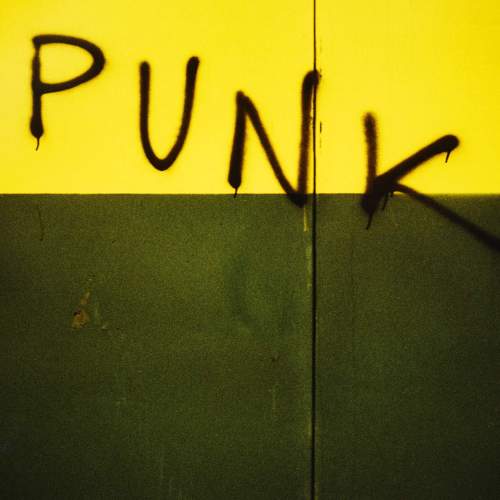 Vojko Flegar (1958) is a law graduate, retired journalist, contributor to Radio Študent and Tribuna, correspondent, commentator and editor of Delo and Dnevnik, and freelance journalist. He was also an occasional photographer who followed early Slovenian punk, rock and alternative music with his camera in the late 1970s and early 1980s, when these marginal creative practises were not yet of interest to most "serious" photographers. His mainly reportage-like ouevre condensed in a relatively short period of three years is focused on the interaction between the performers on stage and the audiences' interventions in public space, especially in the form of graffiti. Some of his photographs, after being published in magazines and on record sleeves from this period, later became part of the visual legacy of this perhaps most subculturally exciting time in Slovenia. Over the last two decades, he has participated in some of Photon Gallery's thematic group exhibitions, such as Laibach Focus (2004), Children of Happiness. Punk Scene of the Early 1980s (2005), Pankrti. Nowt's Getting On (2007), Postering Forbidden. The Story of Buldožer (2015). This work is part of a photographic folder or portfolio box with twenty prints by renowned Slovenian photographic artists from the 1970s to the present day, published on the occasion of the 20th anniversary of Photon Gallery. - The edition is 100 copies, the 40 x 50 cm photographs are printed on archival paper, the prints are signed and accompanied by certificates.
 -
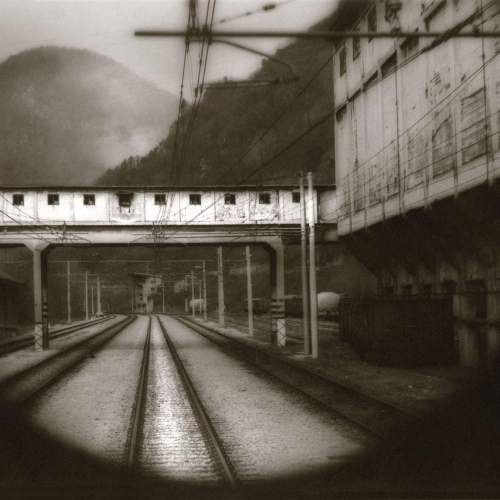 Antonio Živkovič (1962) graduated from the Faculty of Electrical Engineering in Ljubljana. Živkovič grew up in the industrial town of Trbovlje, the centre of the mining industry in Slovenia, which significantly influenced his artistic endeavours. In his work he focuses on capturing places, stories and motifs related to industrial towns. His oeuvre is characterised by poetic documentation of abandoned industrial landscapes. He has been working and exhibiting as a photographer since 1989. His body of work encompasses 16 series, which were exhibited at 28 solo shows and included in over 40 group exhibitions, both in Slovenia and abroad. He has exhibited at the Photonic Moments festival with the solo exhibition Traces of the Past (2010) and at the Photon Gallery in Ljubljana with the solo exhibitions Water Towers (2004), Industrial Interiors (2005) and Reconstructions (2007). In 2009, his monograph Black Valley was published, and in the same year the City Art Gallery in Ljubljana presented his retrospective exhibition Photographs 1998–2008. At the Idrija Municipal Museum he presented his exhibition Doors / Last Shift (2017). This work is part of a photographic folder or portfolio box with twenty prints by renowned Slovenian photographic artists from the 1970s to the present day, published on the occasion of the 20th anniversary of Photon Gallery. - The edition is 100 copies, the 40 x 50 cm photographs are printed on archival paper, the prints are signed and accompanied by certificates.
 -
 Bojan Salaj (1964) has been active as an art photographer since the 1990s, producing various original projects. He was employed as a photographer at the National Gallery in Ljubljana between 1994 and 2018, and is therefore the author of many photographs of Slovenian cultural heritage in the field of visual art. He lives and works in Ljubljana. His artistic focus is centred on questioning the representation of photography in mass media, on the iconography of power structures, as well as on the models related to construction of historical and national cultural identity. His approach is highly conceptual and follows objectivist principles. As part of the Photonic Moments festival, he presented his solo exhibition Interiors – Correspondences at the National Gallery of Slovenia (2014) and later at the Makina Gallery in Pula (2016) under the title Correspondences. His works were also included in the group exhibition Aftermath. Changing Cultural Landscape in the Kolovičevi dvori Gallery in Zagreb (2013), in the exhibition City Perspectives (2008) and Insights (2014) in the Photon Gallery. This work is part of a photographic folder or portfolio box with twenty prints by renowned Slovenian photographic artists from the 1970s to the present day, published on the occasion of the 20th anniversary of Photon Gallery. - The edition is 100 copies, the 40 x 50 cm photographs are printed on archival paper, the prints are signed and accompanied by certificates.
 -
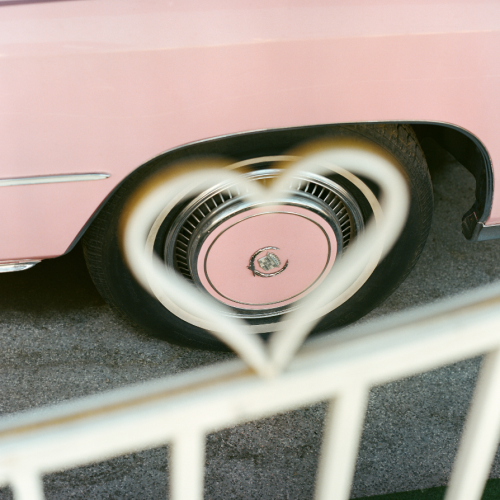 Dino Kužnik (1986) is a New York based photographer and graphic designer. He uses photography as a medium to capture aesthetically unique scenes, with an emphasis on colour and composition. After several years of experience as a journalistic photographer, retoucher and graphic designer, he now mainly focuses on personal and commercial photography projects ranging from documentary, automotive, architecture and landscape to environmental portraiture and fashion. His notable clients include Tyler the Creator, Jay Versace, Tesla, Adobe, The New Yorker, Wonderland Sun, etc. In 2019, he published his first hard cover book titled Shaped by the West with the publisher Aint–Bad. His work has been featured in numerous online and print publications. He has exhibited in London, Ljubljana, New York, Toronto, Trieste, Arles, Detroit and Paris. In 2017, he was shortlisted for the Landscape category of the Sony World Photography Awards and was exhibited alongside Martin Parr at Somerset House in London. This work is part of a photographic folder or portfolio box with twenty prints by renowned Slovenian photographic artists from the 1970s to the present day, published on the occasion of the 20th anniversary of Photon Gallery. - The edition is 100 copies, the 40 x 50 cm photographs are printed on archival paper, the prints are signed and accompanied by certificates.
 -
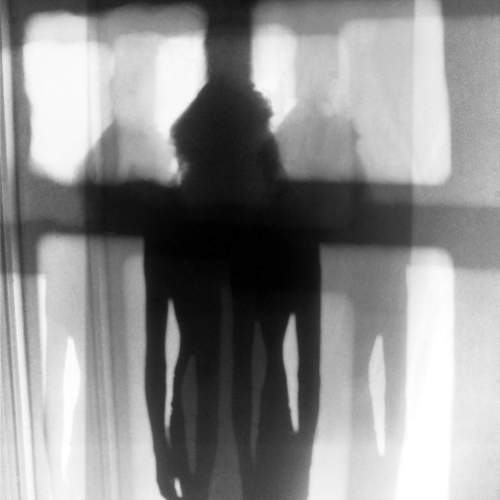 Eva Petrič (1983) is a conceptual, intermedia artist who works with various disciplines of fine art, as well as with photography, performance and writing. She graduated from psychology and fine art at the Webster University in Vienna (2005) and later pursued a master’s degree in new media at Transart Institute in Berlin/Danube University Krems (2010). She participated in over 60 solo and 110 group exhibitions across Europe, USA and Asia. She lives and works in Ljubljana, Vienna and in New York. She was the first Slovenian artist to exhibit two large-scale installations at the famous St. Stephan Cathedral in Vienna in 2016. In the same year, she also participated in one of the biggest annual open-air art projects in New York, Sing of Hope. Her artistic expression includes photography, video, sound, performance, design, poetry and writing. In the forefront of her work is the concept of spatial atmosphere, both on the physical, mental, imaginary and metaphorical level. Since 2017, she has been represented in the USA by Mourlot Gallery in New York. This work is part of a photographic folder or portfolio box with twenty prints by renowned Slovenian photographic artists from the 1970s to the present day, published on the occasion of the 20th anniversary of Photon Gallery. - The edition is 100 copies, the 40 x 50 cm photographs are printed on archival paper, the prints are signed and accompanied by certificates.
 -
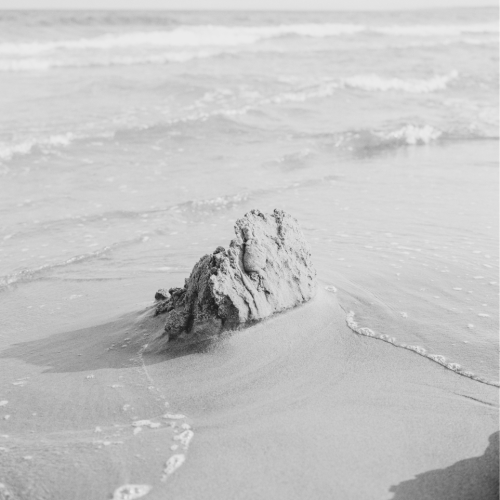 Jošt Dolinšek (1997) is a visual artist primarily interested in art photography. In 2020, he earned a BA in psychology at the University of Ljubljana. He is currently based in Gothenburg, Sweden, where he studies photography at the Academy HDK-Valand. Dolinšek mainly works on long-term projects, exploring the visual experience of the environment and his relation to it. He is interested in various approaches to photographic art, combining it with other media, such as sound and installation. In 2018, he exhibited and published his series In Between under the If Slovenia Were project. Dolinšek was one of the selected artists in the 3rd cycle of PARALLEL Photo Platform. Among others, he has exhibited his works in Robert Capa Center in Budapest, at Photon Gallery in Ljubljana and Vienna, at Voies-off Festival in Arles, Charta Festival in Rome and Landskrona Foto Festival. In 2021, he presented his series To Move the Sun and Earth Away in the Curiosa sector at Paris Photo. This work is part of a photographic folder or portfolio box with twenty prints by renowned Slovenian photographic artists from the 1970s to the present day, published on the occasion of the 20th anniversary of Photon Gallery. - The edition is 100 copies, the 40 x 50 cm photographs are printed on archival paper, the prints are signed and accompanied by certificates.
 -
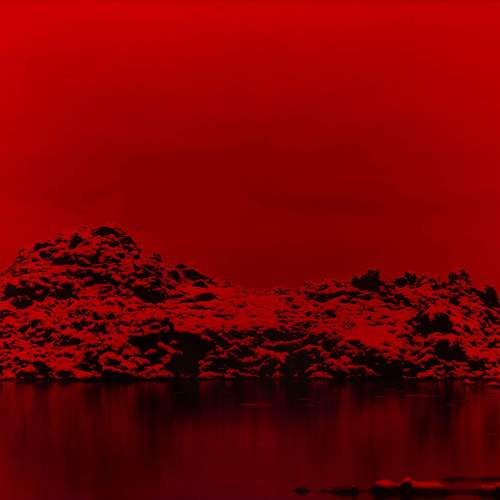 Peter Koštrun (1979) graduated from Academy of Fine Arts and Design in Ljubljana, where he currently teaches at the Department of Photography. He has been exhibiting at home and abroad since 2003. Koštrun is a master of landscape photography known for his depiction of empty and deserted landscapes, as well as his refined selection of framing and light. He is less interested in the documentary dimension of the land due to his conceptual approach to the genre. His works contain a subtle atmosphere that evokes a feeling of something greater or even immortal. Recent solo exhibitions include Moments, Mottard & Jenray, Liège (2012) in Belgium; The Time is Now, Photo Gallery Lang, Samobor in Croatia (2012), Singularity, Photon Gallery in Vienna, Austria (2014) and Premonition, Center for Contemporary Arts Celje, Slovenia (2016) and Photon Gallery Vienna (2019). Koštrun has shown his work in many group exhibitions at home and abroad, including Almost Spring, 100 Years of Slovene Art at the Maribor Art Gallery (2012), as well as in one of the most important exhibitions of contemporary landscape photography, Sense of Place at the Bozar Expo in Brussels (2012), and the exhibition Land / City / Real / Imagined at Diemar / Noble Gallery in London (2011). Koštrun’s works can be found in the Essl collection in Vienna and in the collection of the Cabinet of Slovenian Photography in the Gorenjska Museum in Kranj. This work is part of a photographic folder or portfolio box with twenty prints by renowned Slovenian photographic artists from the 1970s to the present day, published on the occasion of the 20th anniversary of Photon Gallery. - The edition is 100 copies, the 40 x 50 cm photographs are printed on archival paper, the prints are signed and accompanied by certificates.
 -
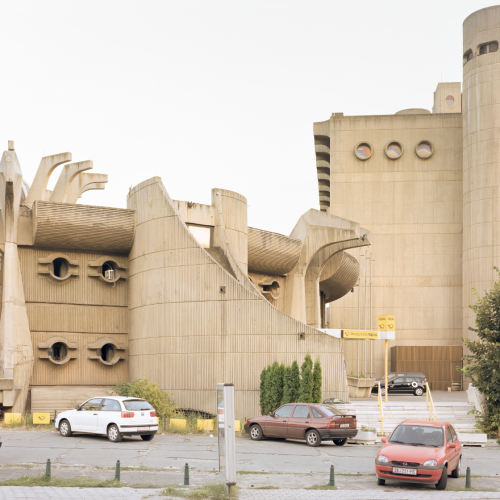 Roman Bezjak (1962) studied photography in Dortmund. From 1989 to 1999 he worked on photo essays worldwide for the magazine of the Frankfurter Allgemeine Zeitung and other German print media. In 1996, he won the German Photography Award. In 2000, he was appointed professor of photography at the Bielefeld University of Applied Sciences, where he has been a dean since 2014. Between 2005 and 2011, he produced the work Archaeology of an Era, Images on Socialist Postwar Modernism. From 2011, Roman Bezjak presented his work in numerous solo exhibitions, including at the Sprengel Museum, Hannover and at the GoEun Museum of Photography, Busan, South Korea. He participated in exhibitions at the Pinakothek der Moderne, Munich, the Architekturzentrum Wien, and the Deichtorhallen Hamburg. Bezjak published his works in photo books: Socialist Modernism published by Hatje Cantz in 2011, this was followed by further works on Socialist Modernism in Pyongyang (2013) and Tashkent (2017–2019) and its revision and reshaping in Skopje (2019). This work is part of a photographic folder or portfolio box with twenty prints by renowned Slovenian photographic artists from the 1970s to the present day, published on the occasion of the 20th anniversary of Photon Gallery. - The edition is 100 copies, the 40 x 50 cm photographs are printed on archival paper, the prints are signed and accompanied by certificates.
 -
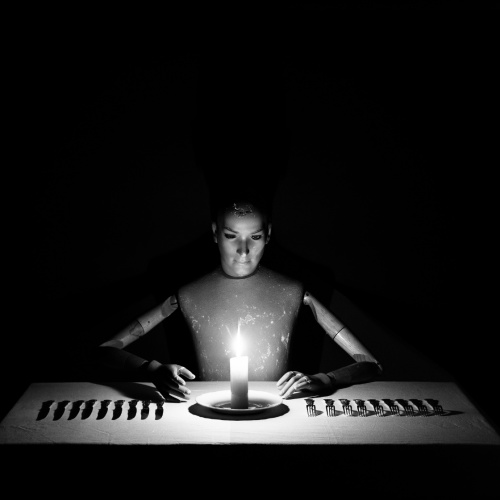 Stane Jagodič (1943) has been active in various fields, media and contexts of visual art since the mid-sixties. After graduating from the Academy of Fine Arts in Ljubljana in 1970, he soon became one of the most active and prominent artists in Yugoslavia, due to his distinguishable artistic expression. In his continuously developing body of work, he has adopted several different concepts of artistic production using various artistic media such as photography, painting, graphics, cartoons, performance, assemblages and object art (installations). Since 1967, Stane Jagodič has been exploring artistic photography and some of its creative derivates like photomontage and photo collage, which are the most significant in his artistic production. Stane Jagodič was a co-founder and conceptual leader of Grupa Junij, active between 1970 and 1985. The group worked as a broad artistic platform that included a number of prominent local and international artists. As an independent artist, Stane Jagodič participated in more than 50 solo and more than 200 group exhibitions worldwide. He lives and works in Ljubljana. This work is part of a photographic folder or portfolio box with twenty prints by renowned Slovenian photographic artists from the 1970s to the present day, published on the occasion of the 20th anniversary of Photon Gallery. - The edition is 100 copies, the 40 x 50 cm photographs are printed on archival paper, the prints are signed and accompanied by certificates.
 -
 Tomo Brejc (1975) studied at the Faculty of Arts in Ljubljana, where he graduated with his thesis The End of Photography – or Just a Chance to Rethink European Visual Culture. In recent years, he has been active in the fields of artistic production, fashion photography and theoretical writing. Between 1999 and 2003, he was a member of the editorial board of the magazine Fotografija, where he also published several professional articles on the theory of photography and in the field of photographic production. He collaborates with many national and international publications and agencies. He is one of Slovenia’s most internationally successful photographers. Brejc has developed his own distinctive style over the years, encompassing his extensive knowledge of both the photographic medium and art history. A graduate in philosophy and cultural sociology, Tomo Brejc often uses principles from philosophy and cultural theory in his work. His photographs are therefore conceptually profound and well thought out, while at the same time intuitively created and supported by a high level of technical execution. His last solo exhibition in Slovenia was Unfinished Landscapes at Photon Gallery (2022). This work is part of a photographic folder or portfolio box with twenty prints by renowned Slovenian photographic artists from the 1970s to the present day, published on the occasion of the 20th anniversary of Photon Gallery. - The edition is 100 copies, the 40 x 50 cm photographs are printed on archival paper, the prints are signed and accompanied by certificates.
 -
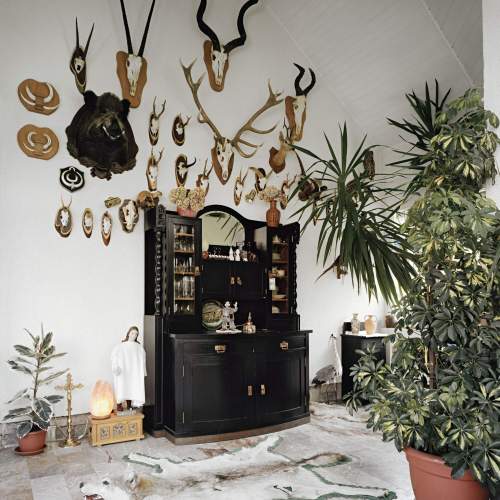 Uroš Acman (1982) graduated in photography at FAMU, Prague in 2003. He later continued his studies on a post-graduate level at École cantonale d’art de Lausanne (Écal) in Switzerland, where he graduated in 2008. He currently teaches photography at the Secondary School for Design and Photography (SŠOF) in Ljubljana. His works have been shown in several group exhibitions in Slovenia, Italy, Austria, Slovakia and the Czech Republic. His solo exhibitions include the series Museums in the Simulaker Gallery (2008) and the Škuc Gallery in Ljubljana (2009) which documents the so-called hunting rooms and spaces. More recently, his series Night was shown in the group exhibition Without Borders? Boundless Invisible Walls, which travelled from Fotogalerie Rathaus Graz to Galerie Photon in Ljubljana and Bad Radkersburg on the Austrian-Slovenian border. This work is part of a photographic folder or portfolio box with twenty prints by renowned Slovenian photographic artists from the 1970s to the present day, published on the occasion of the 20th anniversary of Photon Gallery. - The edition is 100 copies, the 40 x 50 cm photographs are printed on archival paper, the prints are signed and accompanied by certificates.