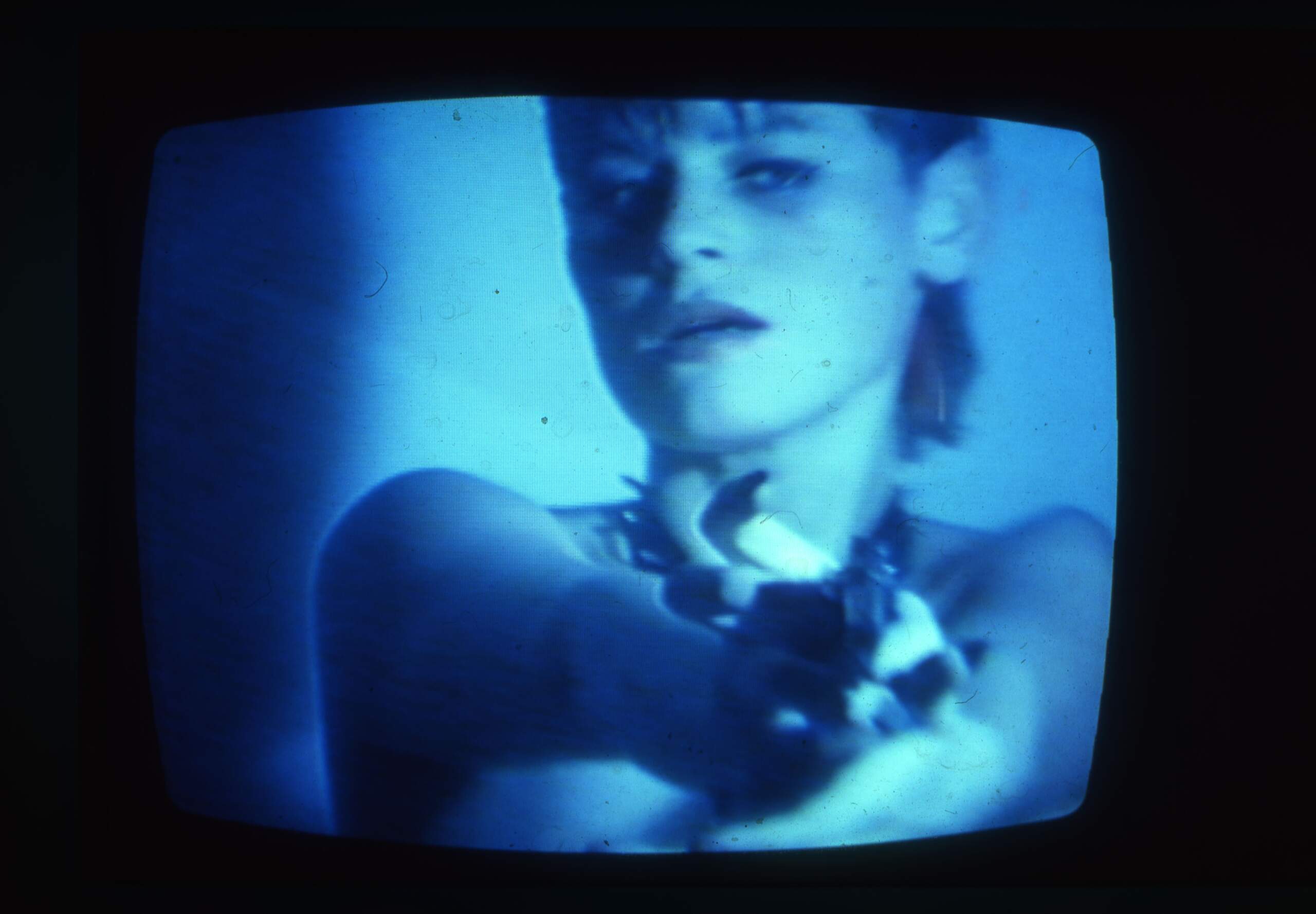
Insurgent Flows & Insurgent Images
Opening: Thursday, February 1st, 2024 at 19:00.
1. 2. – 23. 2. 2023
It is a multidisciplinary exploration of various themes including death, violence, empowerment and the future. It encourages viewers to engage with challenging aspects of history and to think critically about historical narratives, especially those that involve the lasting effects of systematic violence. The exhibition is an interesting and provocative encounter between artistic expressions and critical discourses.
Curators: Marina Gržinić & Jovita Pristovšek
Feauturing: Tjaša Kancler, Aina Šmid, Zvonka T. Simčič, Nina Cvar, Siniša Ilić, Vesna Liponik, Kristina Božič
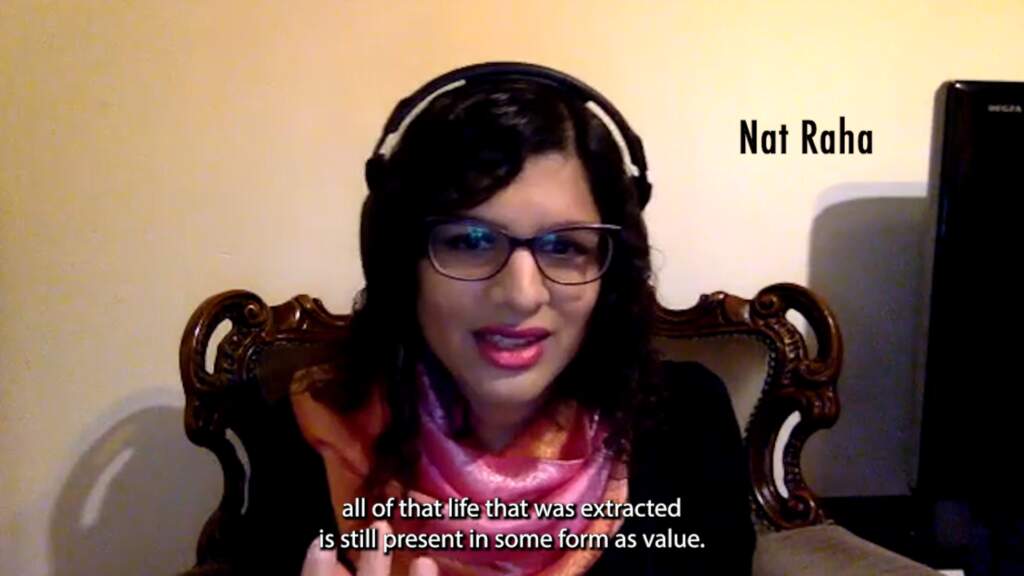
“All of that life that was extracted is still present in some form as value.” (Nat Raha)
A Radical Documentary Complex: Insurgent Flows.
I start from a single work, the film Insurgent Flows. Trans*Decolonial and Black Marxist Futures, which was made as a collaborative project. Insurgent Flows is what I call the “radical documentary complex,” which stands in stark contrast to the “prison industrial complex.” A “radical documentary complex” refers to documentaries that focus on addressing pressing social issues in bold and impactful ways. It works with strategies that tell stories of resistance and confront a present that is rife with prejudice, violence, and calculated misinformation. In the “radical documentary complex,” we focus on stories of resistance, the struggles and triumphs of those who resist oppression and injustice. We emphasize the importance of context and historical perspective. The queer and trans* aspects of the film are extremely important elements of its content and form.
The film challenges the White Eurocentric narratives, including the narrative that the only relevant dominance over the algorithm is that of White supremacy. It takes up a variety of issues, including immigration and border policies, technologies used primarily for policing or militaristic purposes, and the US exceptionalism. It is about countering or resisting the deadly effects of necropolitical systems. By illuminating the core of necropolitics, the film confronts viewers with the reality of oppressive systems and asks them to imagine and work toward a more just society. The film relates to the exploration of cinematic performative expressions that challenge and subvert the oppressive forces associated with necropolitics. The term that has become established in necropolitics along with “Queer Death” is “Overkill,” which refers to killing through mechanisms of absurd and excessive violence, violence without limits. It is a maximum of hostile violence directed mainly against trans* people. With communities such as queer and trans*, a new paradigm of thinking about death is emerging.
The reality that documentaries try to capture is always filtered through the subjective interpretations of the director(s), the producer(s), the cinematographer(s). In this sense, we can say that documentaries are inherently a form of fiction because they are always contextualized and therefore limited to certain aspects of reality. Furthermore, social platforms such as social media have added an additional layer of complexity as they have become sources of information for documentaries and simultaneously distribution channels. This has made it difficult to distinguish between true and false information, as they are all entangled with various political and social interests. Therefore, documentary films today are often faced with the problem of how to represent reality without losing their message in the flood of information. We are confronted with a reality that is so brutal and violent that we think it is fiction. This raises the question of whether there is still a connection to reality or whether documentaries have become a purely virtual experience of the traumatic real.
As for the relationship between the real, the symbolic, and the imaginary, this relationship is changing over time, and today social platforms are a crucial part of the imaginary that shapes our perception of reality. On the other hand, precisely because of platforms, the so-called imaginary has taken a privileged position in relation to the real. This means that the symbolic appears only as a form of narrative that no longer has the same meaning. (Marina Gržinić)
-
- Gržinić and Šmid from the video Bilocation, video, 1990
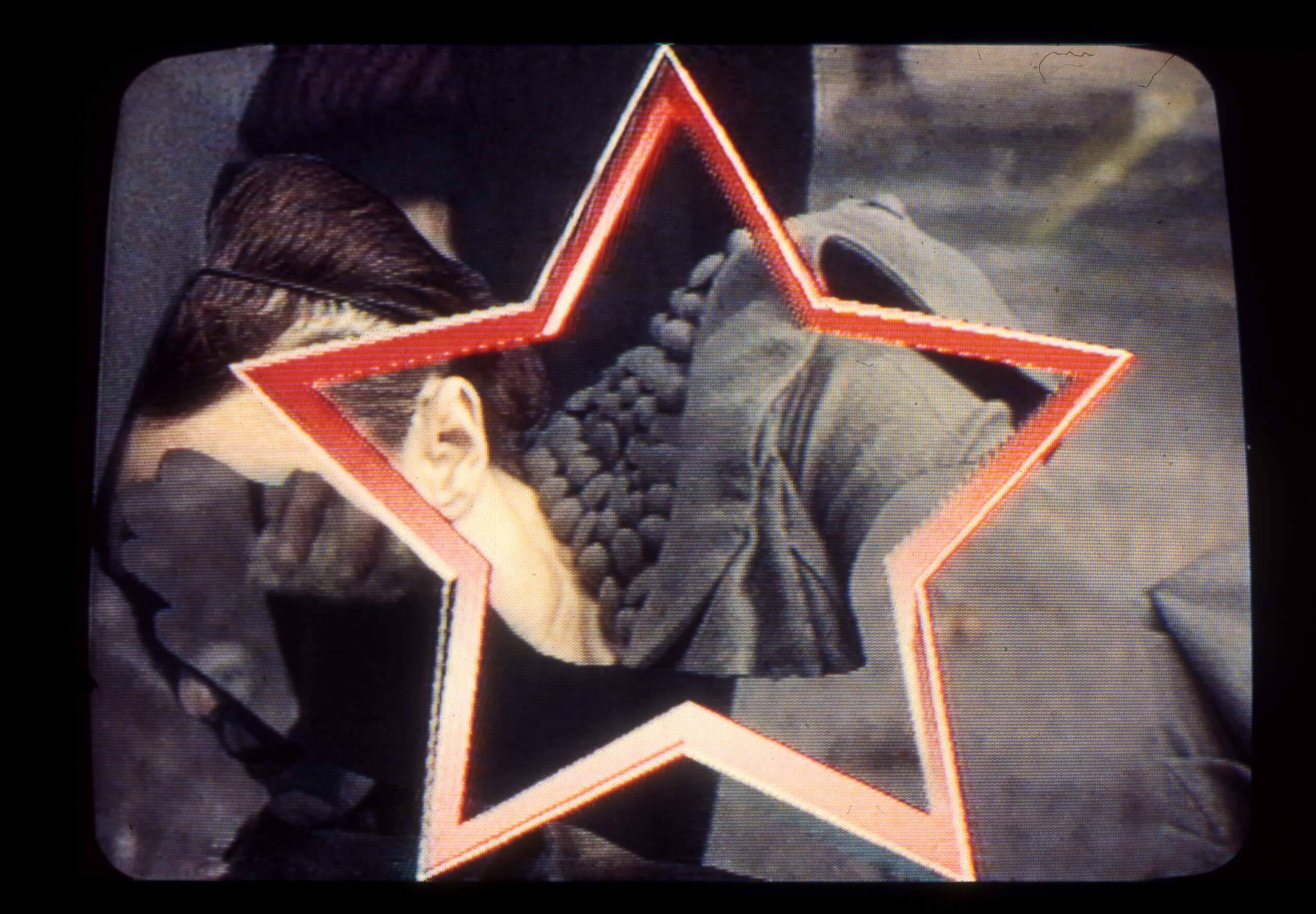
-
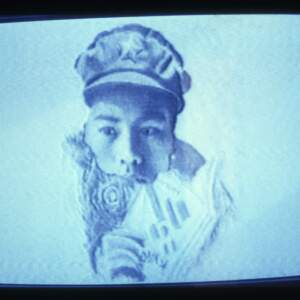
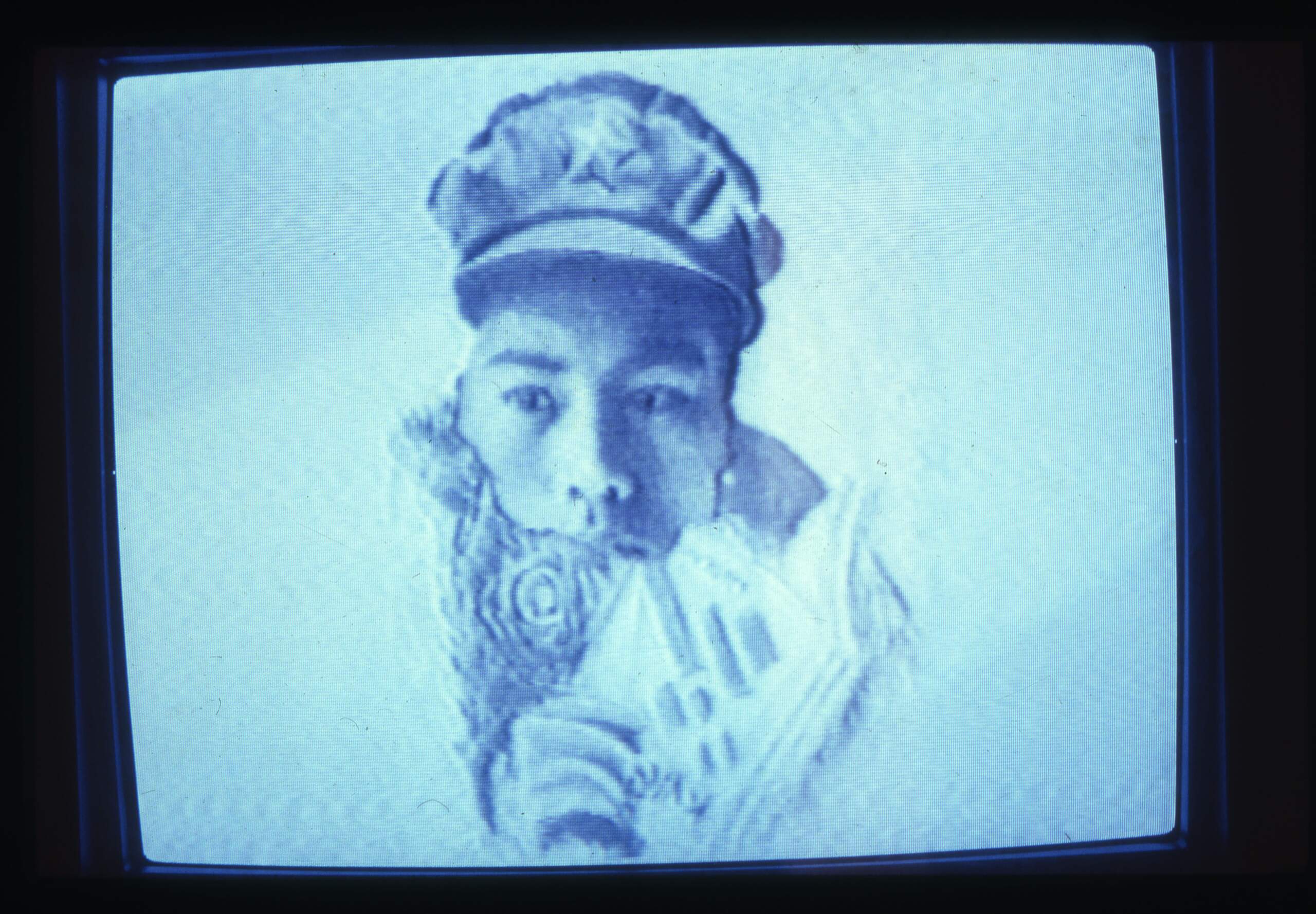
- Gržinić and Šmid from the video Moscow Portraits, video, 1990
-
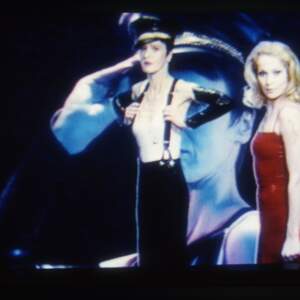
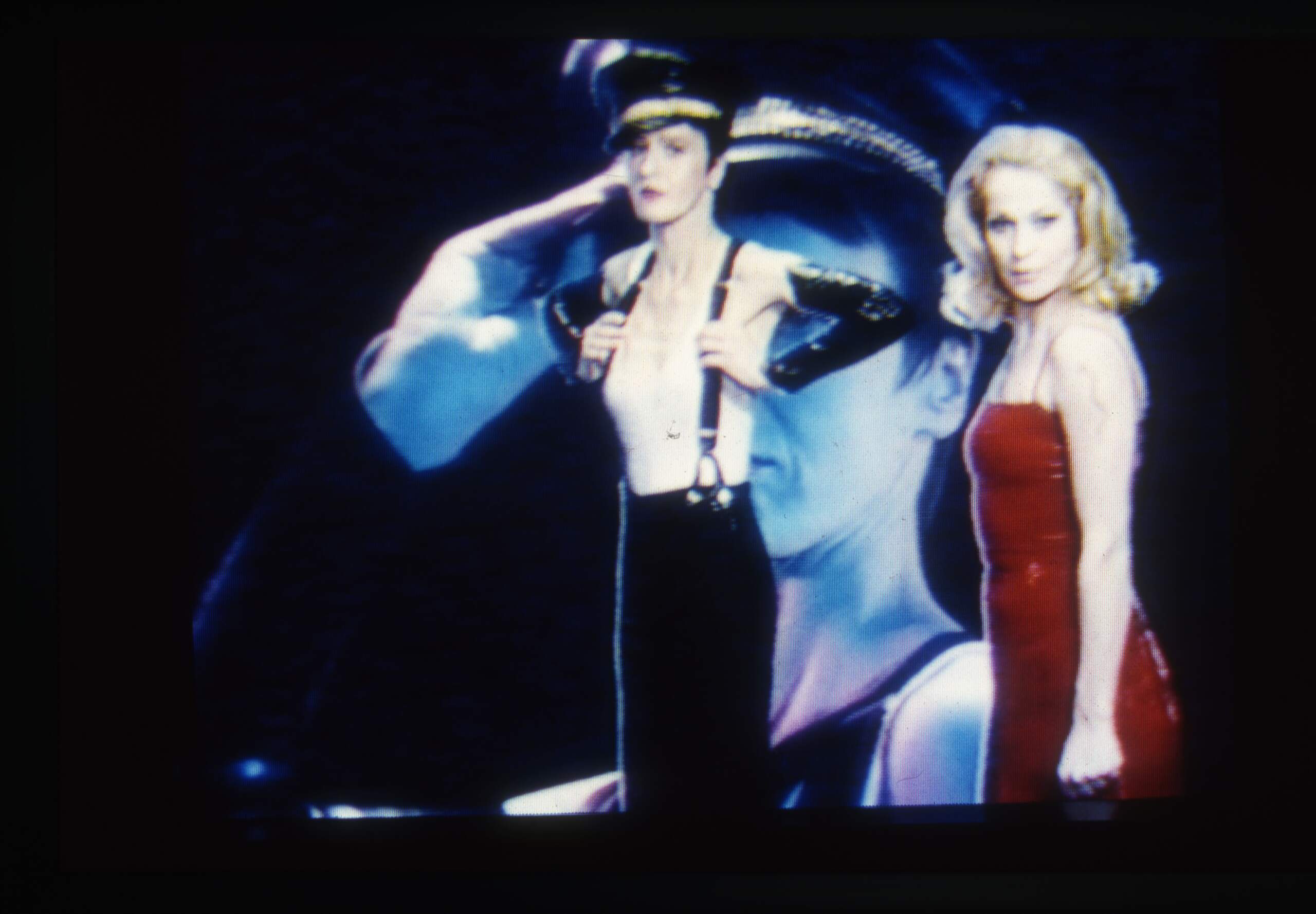
- Gržinić and Šmid from the video Three Sisters, video, 1992
-
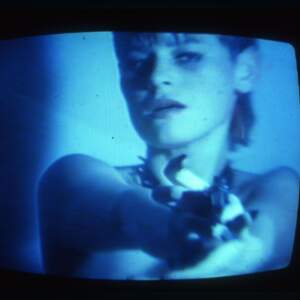
- Gržinić and Šmid in collaboration with and in the group The Borders of Control No. 4, video, 1983